
A Seat at the Table - Art & Collectors
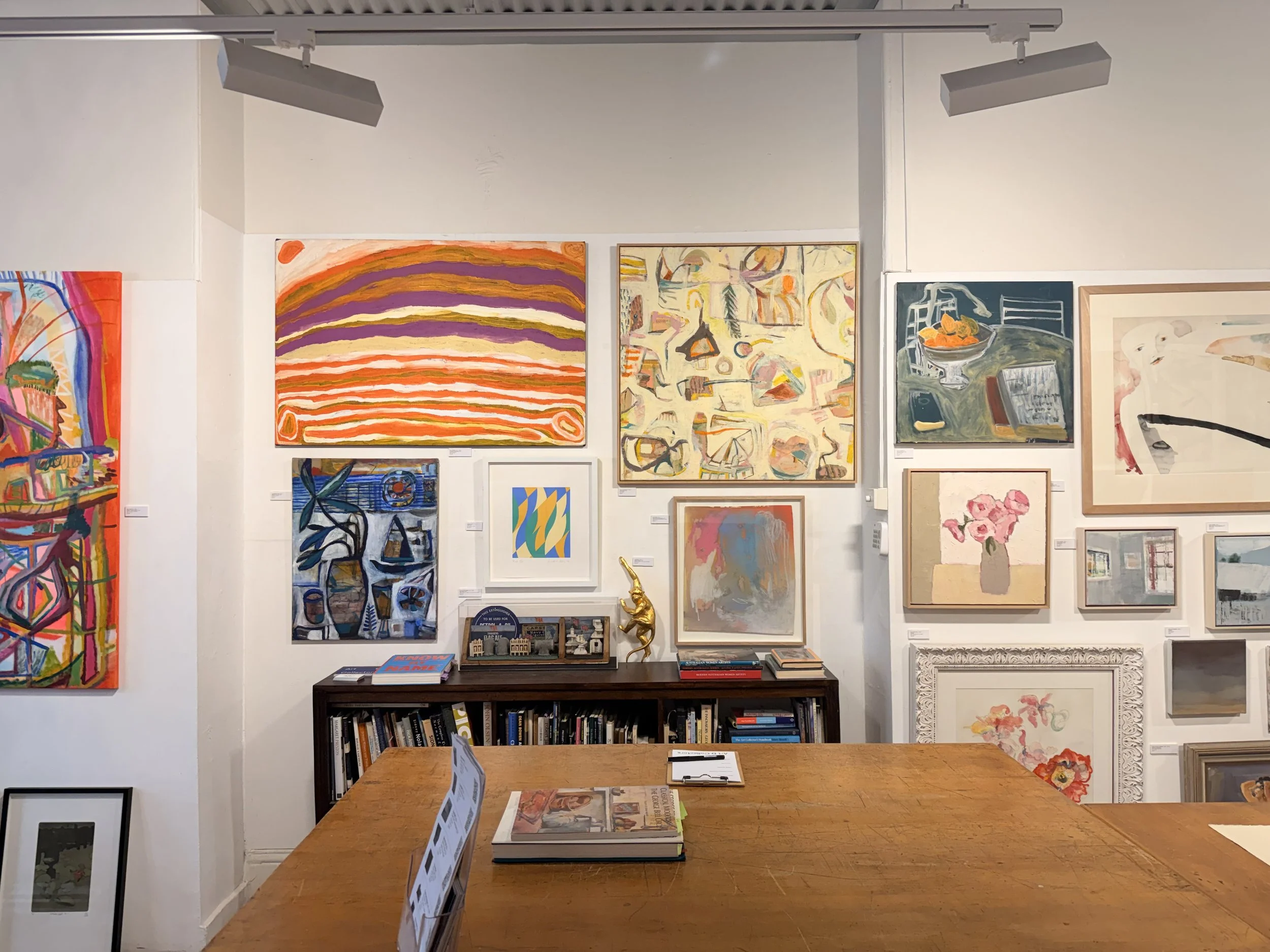
It is with full confidence that I can say not a single art gallery on Gertrude Street is lowbrow. I mean, it’s Fitzroy: of course they aren't. This week though, I went back to my art history roots, and took a look at A Seat at the Table from Art & Collectors. Spanning 101 years (the oldest work a floral still life from 1925, the most recent a self portrait dating from this year) the exhibition is a snapshot of female Australian artists. At first glance, the show is filled with the prerequisite floral still lives, self-portraits, and snippets of home life that come with the territory of a broad subject matter like simply “female artists.” It's when you look through the works, take them in one by one that you see that this is a show of echoes – artists are echoing each other and themselves, calling out through the decades to continue a conversation.
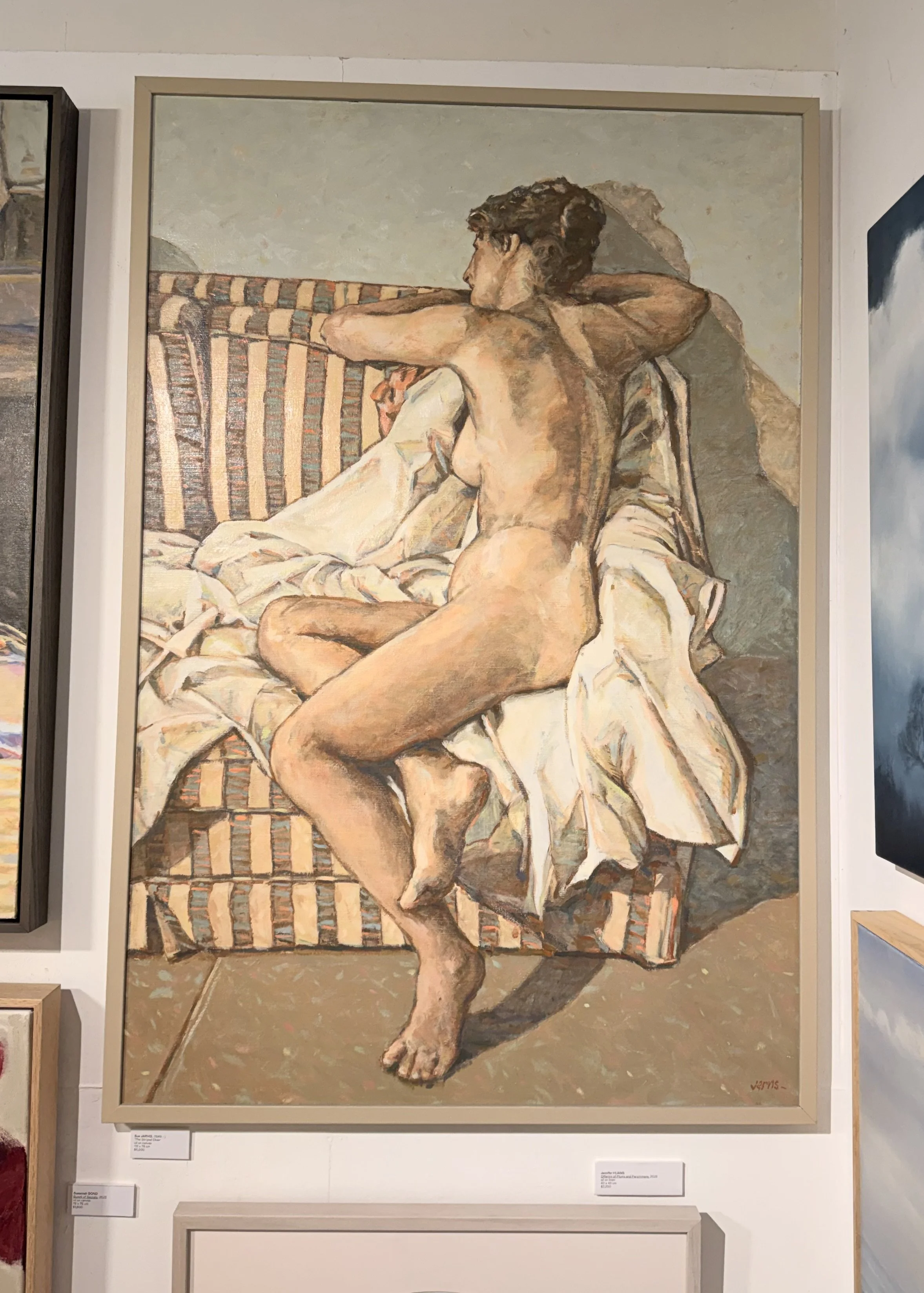
Anne Marie Hall’s Reclining and Sue Jarvis’ The Striped Chair are bookends of the non-floral, figurative works of the show. The two nudes take you from the traditional, sedate nude of Jarvis to the odd, near abstract, almost amorphous nude by Hall. Karima Baadilla’s Soft places, warm teapot brings a still life tradition that begins with Thea Proctor’s 1925 work into a more textural contemporary moment. Erica Tandori brings the proliferation of Australian flora into the now with her gorgeous eucalypts. The quintessential Aussie beach scene is captured by Dorothy Braund with her highly stylized figures and Tanya Hoddinott finds the theme in abstraction that feels like it’s at the edges of reality.
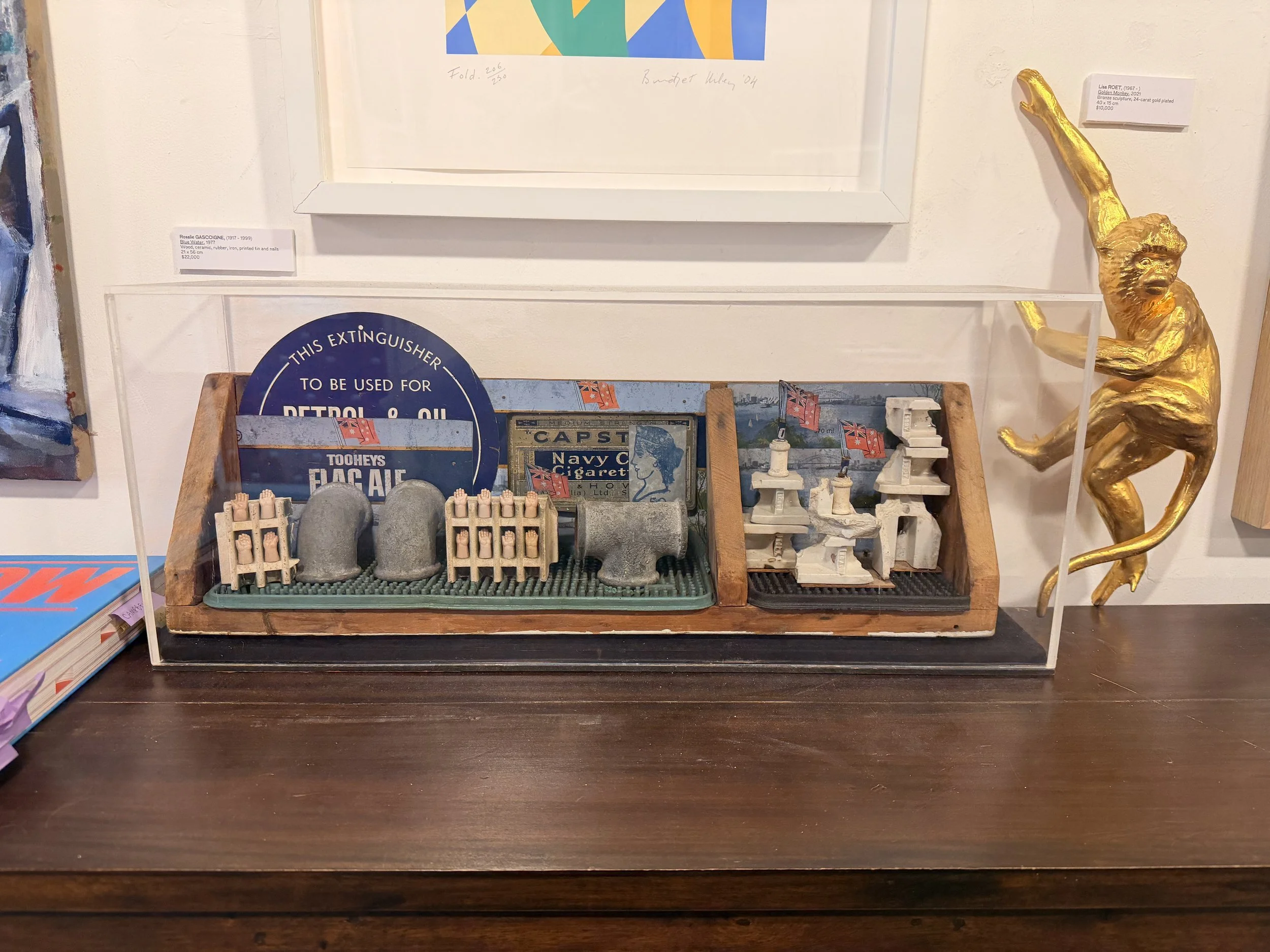
Above the bookshelf, there’s a section of wall that goes from Nora Wampi in the top right corner and ends with Marjorie Bolton Harvey at the top of the stairs which in itself would have been a stellar show. First Tulips of the Season by Evie Cahir had the artist echoing herself across the room to her portrait of contemporary domesticity that hangs on the opposite wall. The washes of colour, the lightness of the mark making endure for Cahir over the works, though they have little in common on a compositional level. Both in the abstract work and in the figurative one, Cahir paints with a clarity of purpose and a tenderness that suffuses the paintings. This tenderness calls out to so many works through the show – on the walls, in the drawer, in the storeroom – that naming them out individually would belie my point. It is not a radical gathering of works, Rosalie Gascoigne’s Blue Water from 1977 is a captivating assemblage work that is perhaps the most off beat. A weird store of doll hands and advertisements, it is the most avant garde work on display, though its difference to the rest of the showing does not make it feel incongruous.
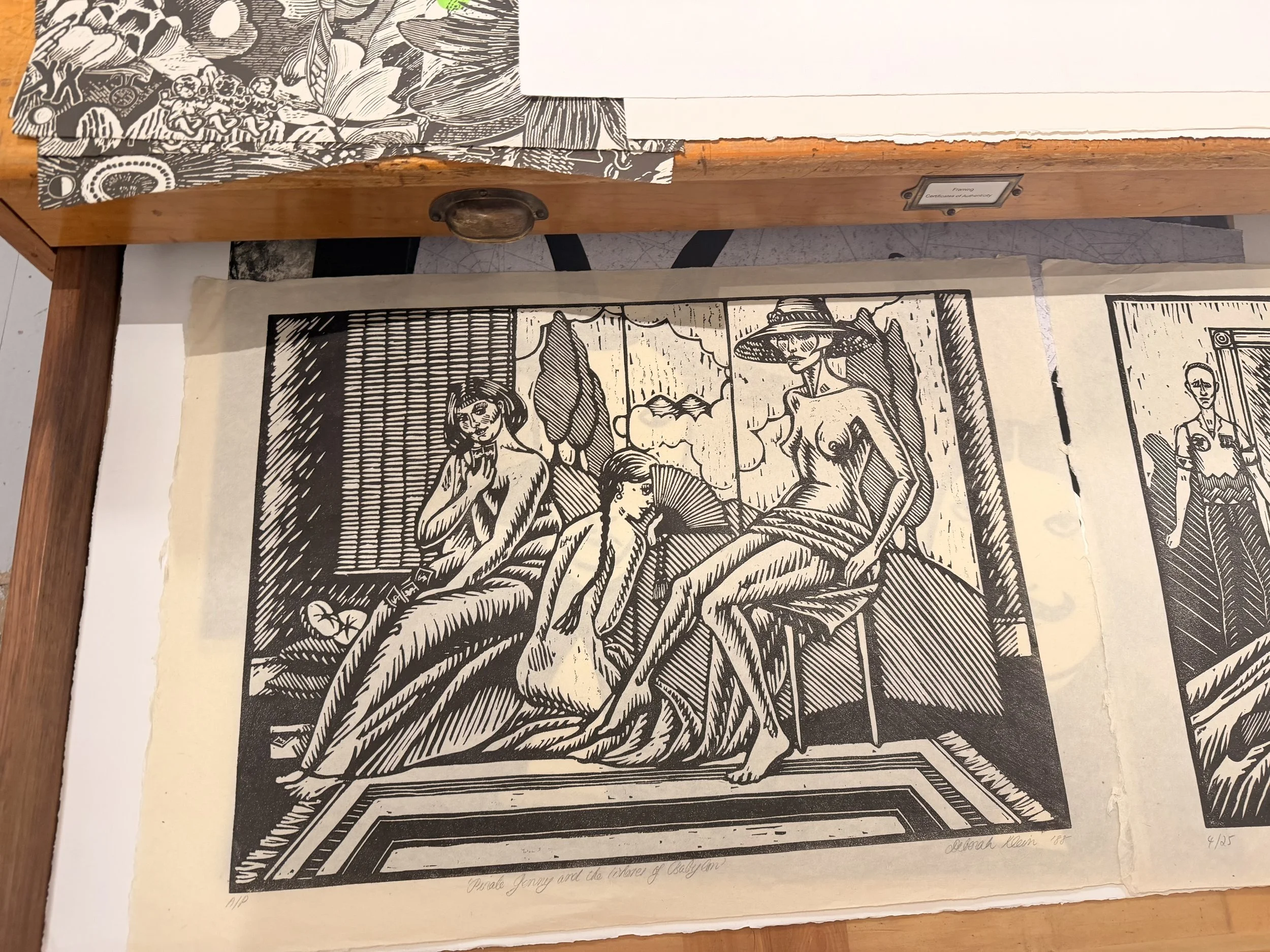
The show, especially for a commercial show, is masterfully curated. In many ways it felt like stepping back in time to a salon, crouching down to get a better look at the lower works, craning my neck to catch the details above me. Every additional work I saw seemed to flow into the next. Take your time with the show, ask to see the works on paper. Early works from Deborah Klein ground her current hyperrealistic portraits with her feminist linocut roots. Judy Cassab’s etchings call out to Jennifer Huang’s self portrait. No artist has ever been just one thing – these works ground that with physical proof. There’s a lineage here, both for their practices and the development of art by women in this country over the last century that Art & Collector’s has captured time and again in their selections.
More than anything, it’s a show that made me want to stay a while. Bec and I ducked into the opening, before deciding that the sea of people was perhaps not the ideal viewing environment. On my return, I lingered, looking again and again, with each detail I caught more and more thankful for the pair of people perusing another set of prints as I waited eagerly to see what was tucked away in the drawers of works on paper while others debated print purchases.
A Seat at the Table is on at Art & Collectors until 16 May.