
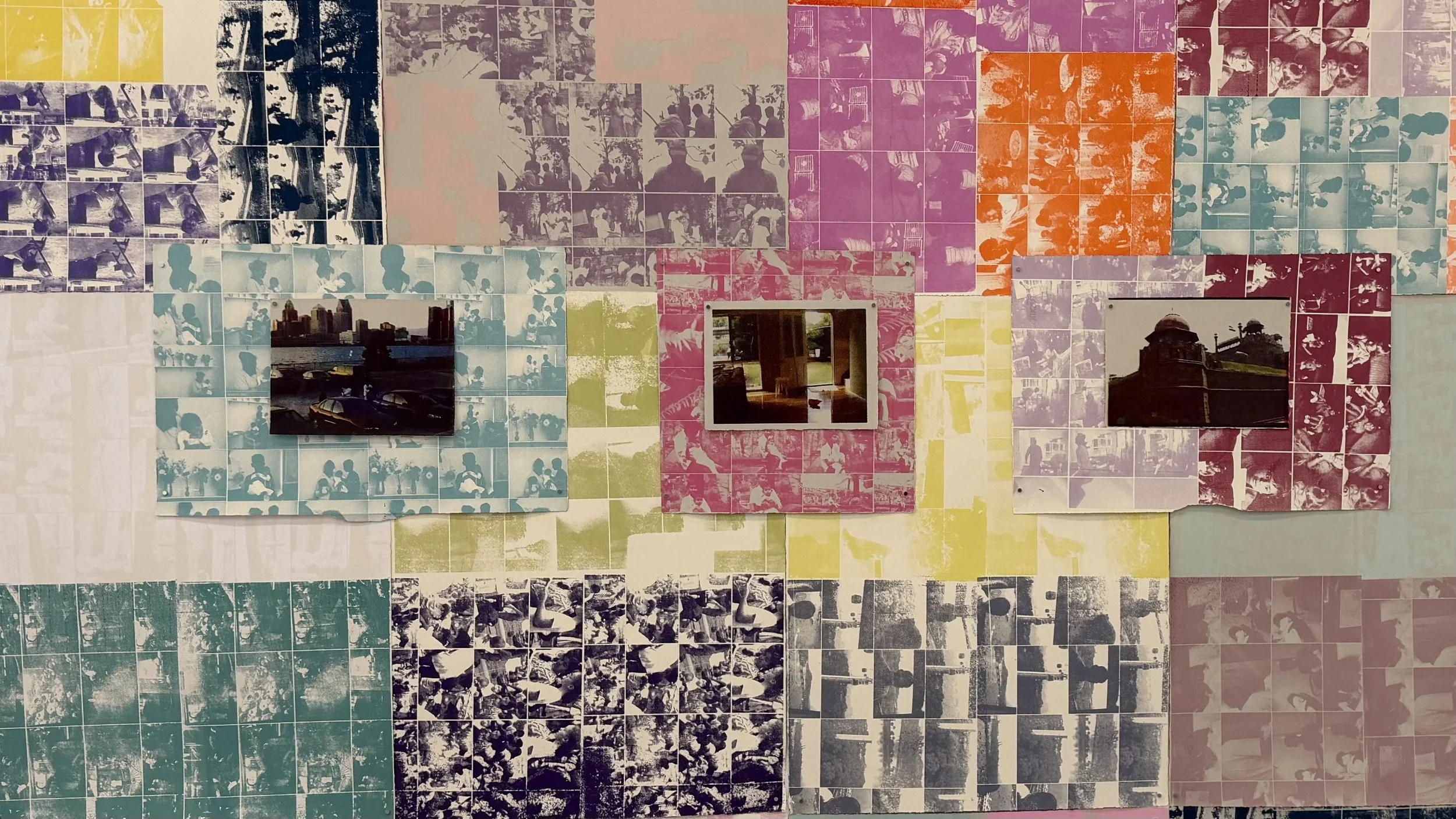
Catrina Paul (detail)
I love a grad show. Much like an art fair, you get to look broadly at what people are making, what's popular, what their references are, and see a true spectrum of skill and ability. MADA Now last year “blew me away.” This year, while I don’t think the overall quality has gone down, I think that my standards have been raised. It’s been a year of good art, especially by students. As much as a grad show should be a showcase of all you have learned, sometimes it is simply the final hurdle you must jump before you can cross a stage and put the whole experience behind you. That being said, there are highlights, well worth the train ride to Caulfield.
No matter how many people are visiting the show, you’re never watching Jenny Cui’s Yin alone. Dotted along the red brick walls in the room are porcelain figures in various states of wholeness, endlessly bearing witness to the video work. The film consumes you. Not since watching Fantasia as a kid have I been so unnerved by animation as a full body experience. The sounds deeply unsettled me, triggering some deep seated misophonia I didn’t even know I had, but I could not stop watching. Cui’s Honours work is a step beyond her accomplishments from the show last year, taking us beyond the drawings on paper from her Bachelors.
Lan Anh Truong’s installation work Thực Nghiệm Đất-Nước: Pre-Irrigation Project 01 pushes the boundaries of installation. The misting intervals, the pots of soil, the personal ties to bonsai cultivation, Truong brings bioart into MADA, forcing the viewer to reckon with their preconceived notions of artmaking. The work feels timely and deeply considered, recognizable as art, good art, before you ever read the accompanying text to make full sense of what you have stepped into.
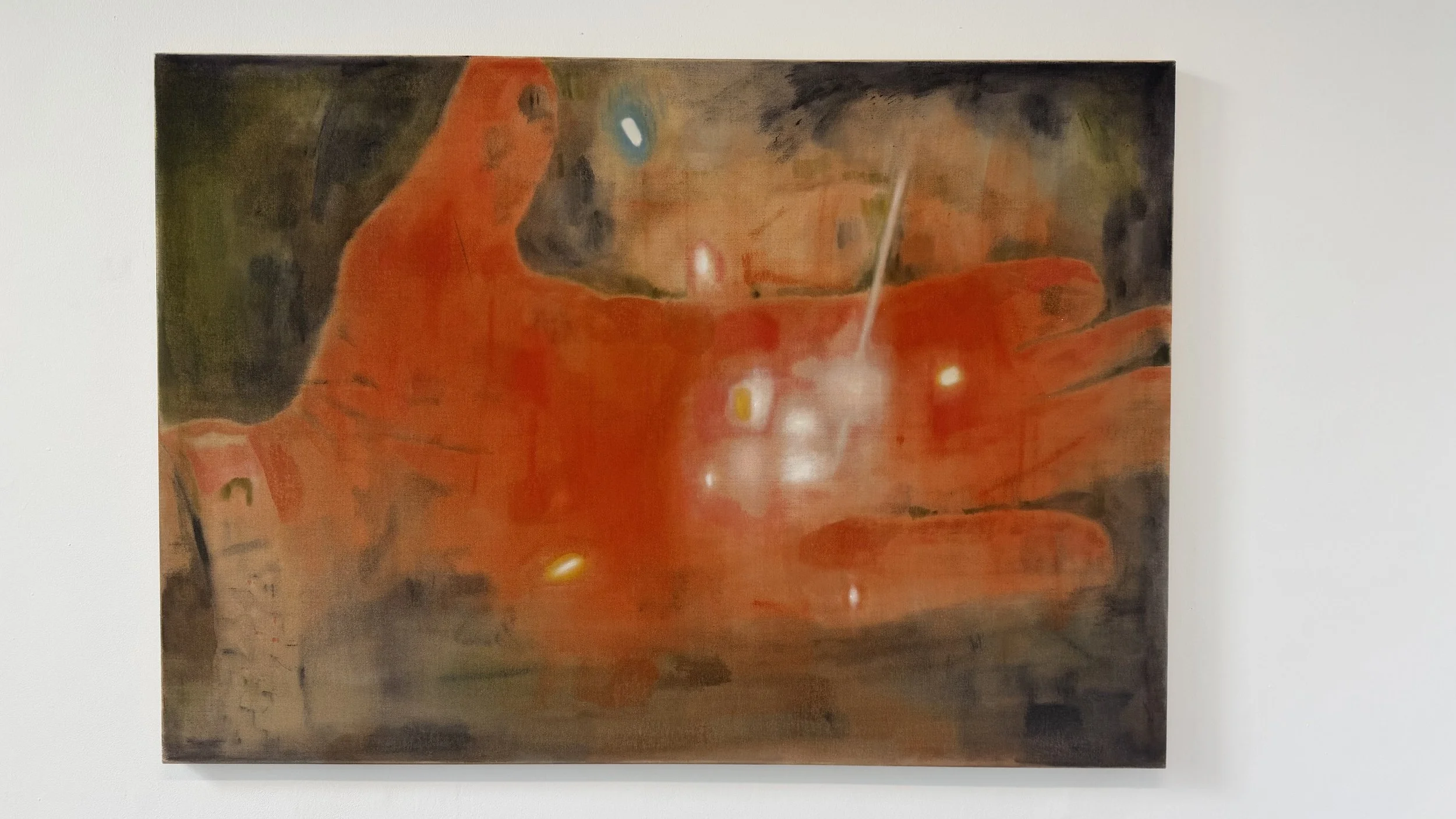
Astrid Bell’s painting of a hand called to abstract expressionist techniques (especially Frankenthaler) while also providing a textural touchstone in a body of work otherwise comprised of wood works. Shelves and a lectern are presented alongside the limb. The painting for me was crucial, a point to remind the viewer that no matter the perfect angles and uniform stain of the wood, these were made by human hands.
Experimentation with framing seemed to be a key concern of multiple students, across both the Honours and Bachelors cohorts. Notable were Chloe Hagger’s framed fragments, inarguably the most interesting use of this. The shreds, delicately placed stills like frames of film, are hacked and cascading and off centre, almost needing the void of the frame to capture the evidence of their disruption. Aletta Mira lets her image exceed the bounds of its aluminium frame, cutting a tree in half. Ava Clifforth demands you get down and look through a peephole into her works, redefining what a frame is. Clifforth is the architect of a haunted house holding me captive initially with a leg made to plie time and again endlessly en pointe, before I even got to the trap door and peephole.
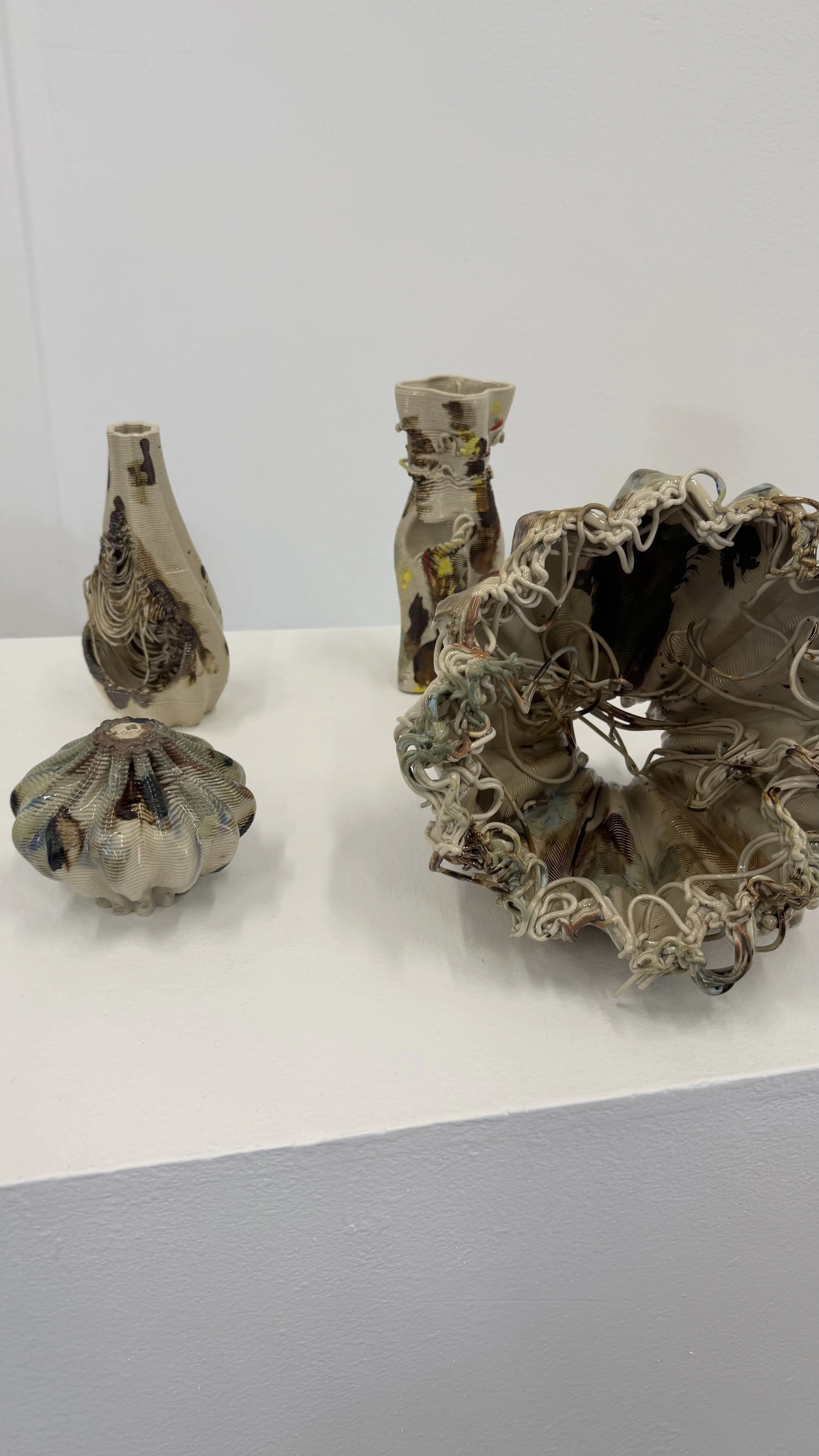
Go to any crafts market in this day and age and you’ll see a proliferation of 3D printed works, not even sanded, filament lines still visible. Negotiated forms from Milla O’Brien plays with this structure and lines, reclaiming it for herself in ceramic works. O’Brien’s use of coils adds dimensionality to the finished forms, letting some exist in finished entireties, others knotted and collapsing, one resembling a pile of pasta more closely than any traditional ceramic work. They feel organic, blooming mushroom-like, every coil catching the light with their glossy glaze.
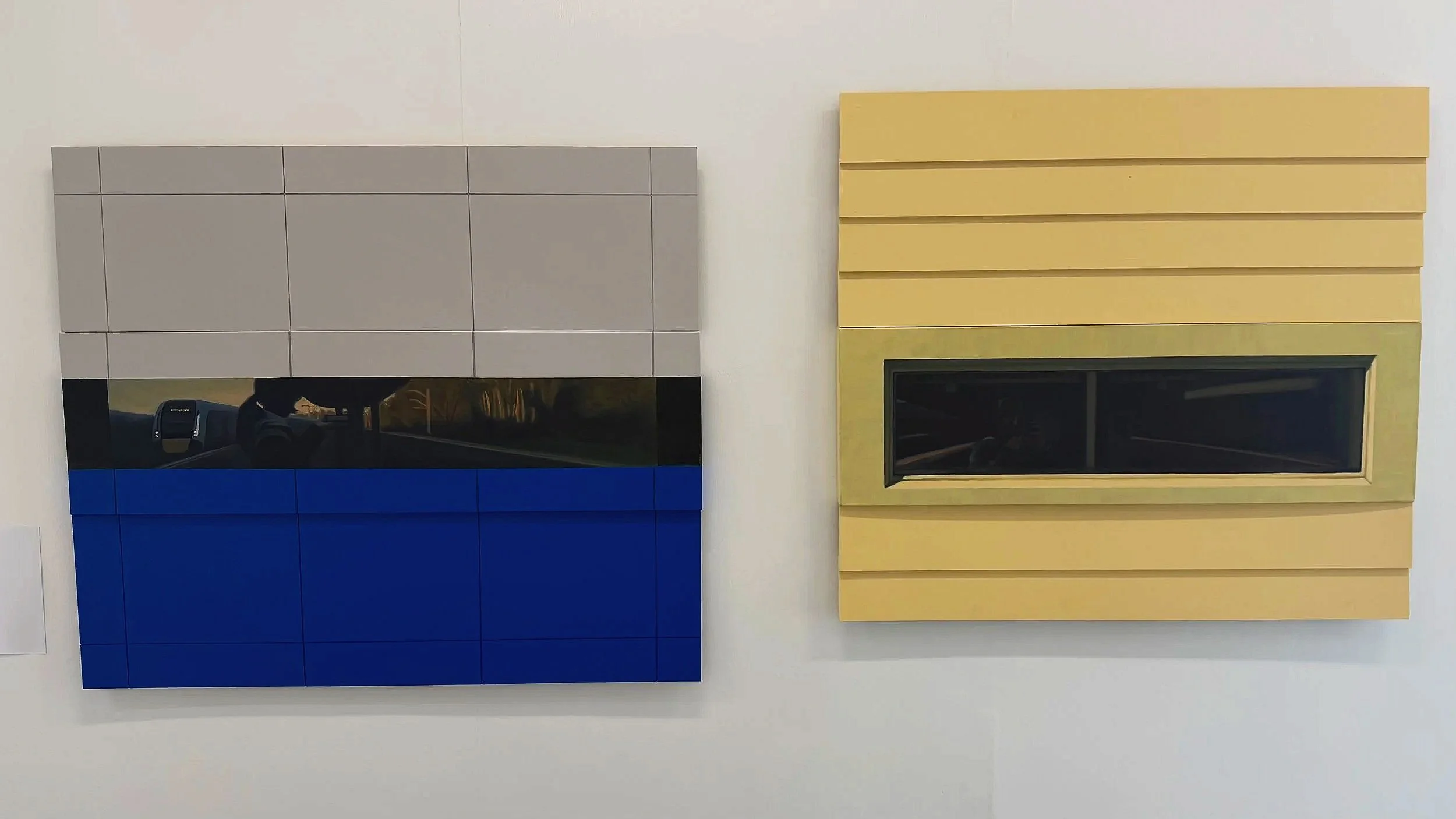
Katie Jing’s oil on canvas works (PSO Pod, Malvern and PSO Pod, Berwick) are my favourite paintings of the show. The scenes are hazy and unreal, documenting the very mundane moment of documenting yourself awaiting a train. Jing’s use of framing - grey and blue panels and yellow siding respectively - forces you to consider the perspective. What are you looking into? What house, what early 2000s academic portable are these train platforms contained in? I felt deeply the cool melancholia of facing down your commute home after an unending day. The slow dread of a platform at 7 in the morning when you feel deep in your bones that the day will not be as kind as you need it to. Directly facing Jing are Catrina Paul’s screenprints, accompanied by an artist book. You can’t help but view the works as conversant. Paul offers glimpses into worlds in rainbow colours, save for three. Those three - different cities, places, continents - ground the rest, touchstones to ground the surrounding prints. More than anything, I should have taken the time to read her accompanying cockroaches are hard to kill and then gone back to the prints, well worth grabbing your own copy.
I am not going to walk into a grad show and rip anyone a new one. Grad shows should be taken seriously, but at the end of the day that criticism should come from their professors. I will say that there are works at grad shows that seem to be the same year after year: there’s always a furry, at least one CRT TV, a horse (any medium), and so many works that are clearly labours of love, if not a resultant fruitful effort. Far be it for me to accuse anyone of phoning in a final project - glass houses and all that. All I can hope is that these students have found what they wanted through their degree and a knowledge of what their practice brings them.
MADA Now is on at the Monash Caulfield campus until 3 December.