
Melbourne Art Fair
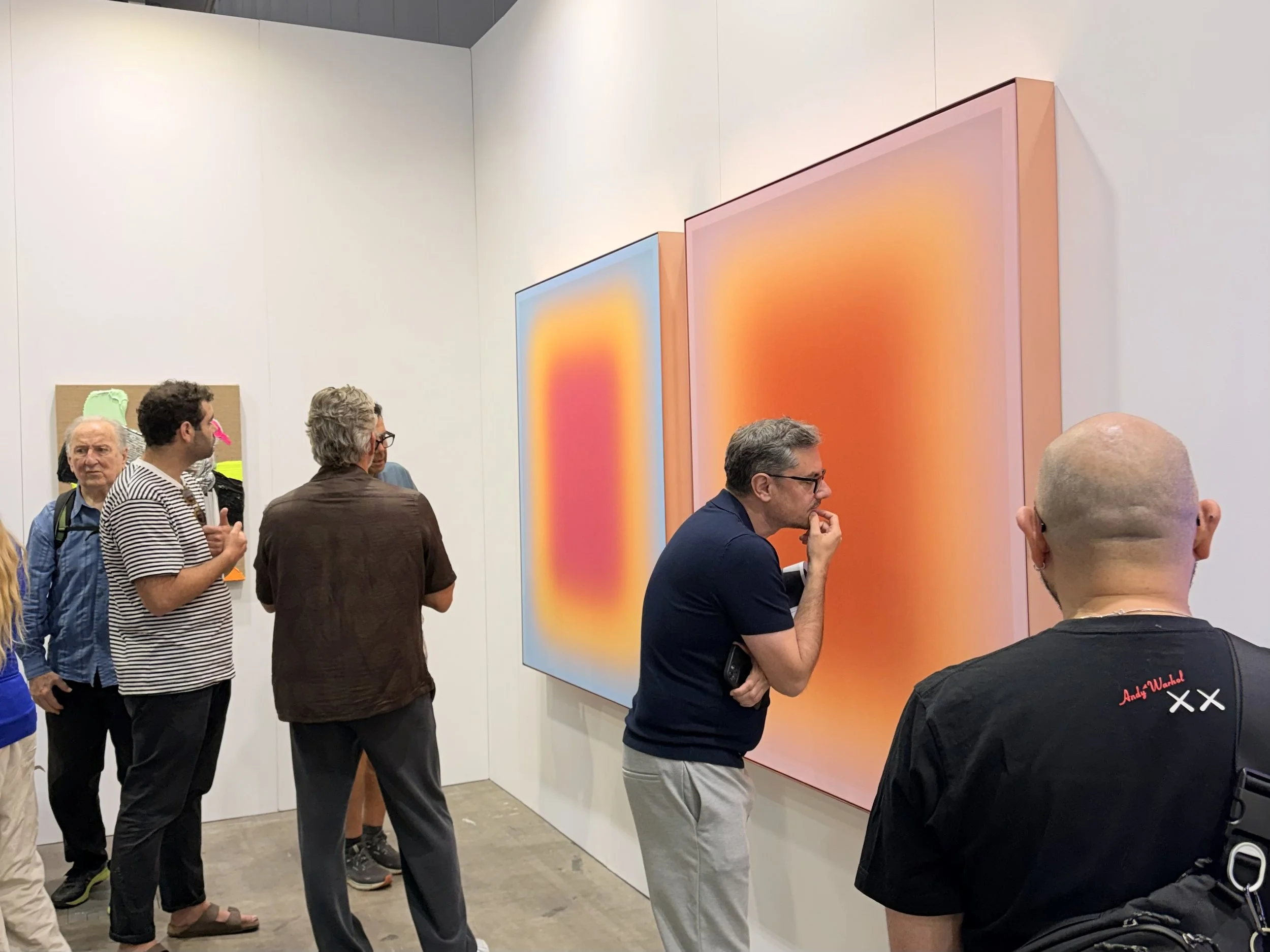
Jonny Wiele at 1301SW
Though hardly the first event of the year, the Melbourne Art Fair marks the end of summer, a back to school for the art scene in the city. It’s a key time to take the temperature of the market, see what is in vogue (abstract expressionism always) and out of favour (photography, with two notable exceptions). The Melbourne Art Fair is not lowbrow, though I certainly felt I was wandering through opening night.
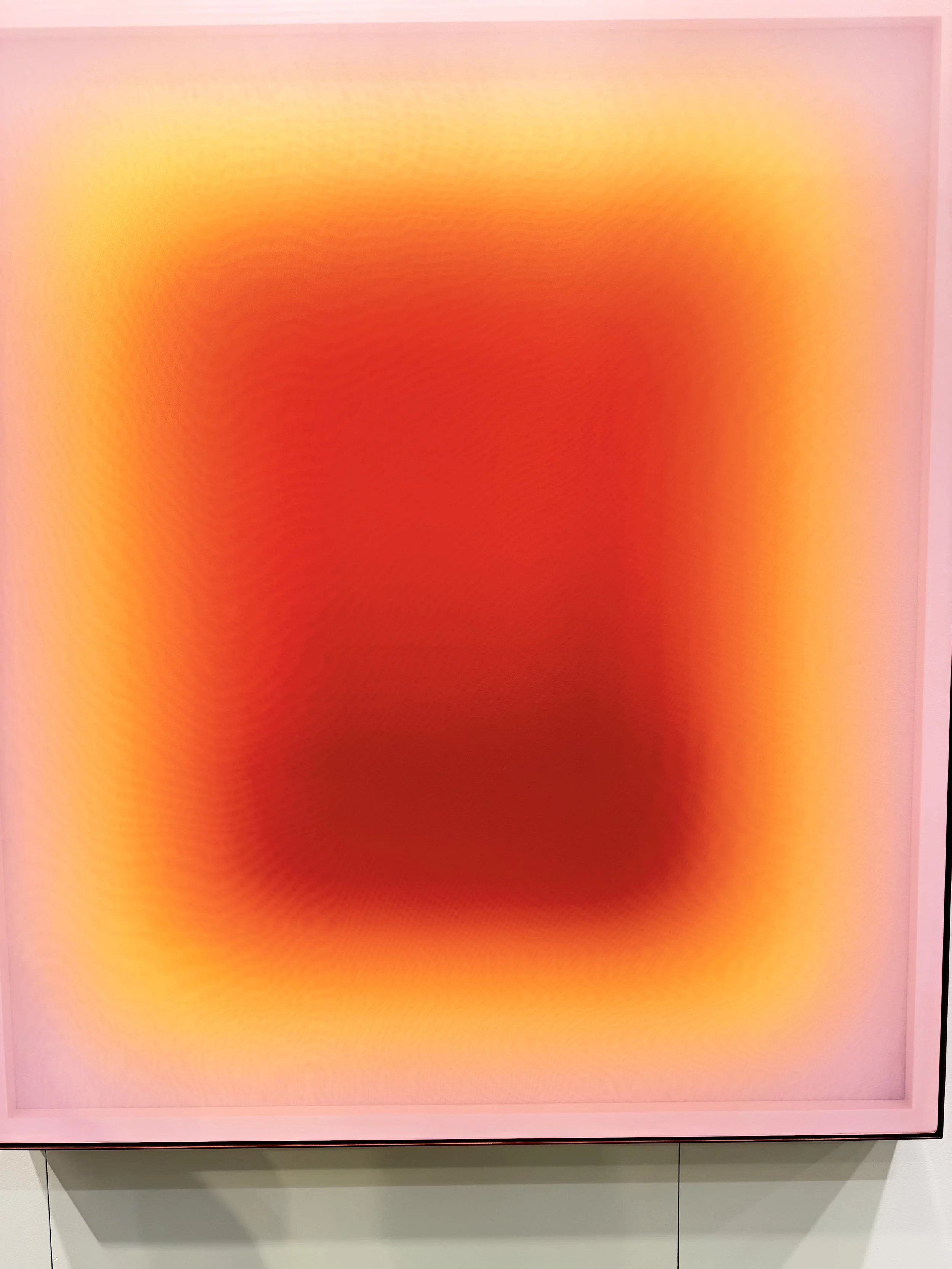
Writing about MAF gives me a chance to talk about how much I loved Jonny Wiele’s nylon works from 1301SW last year. They’re the sexiest non-figurative works I’ve seen. There were two hanging side by side in the gallery’s booth, both square portals into a technicolour world. The tautness of the voile was like nylon stockings — there but only just. Obscuring what was behind while the framing still poked through. Airy and fun, Wiele’s body of work was entrancing, losing none of its power on second encounter.
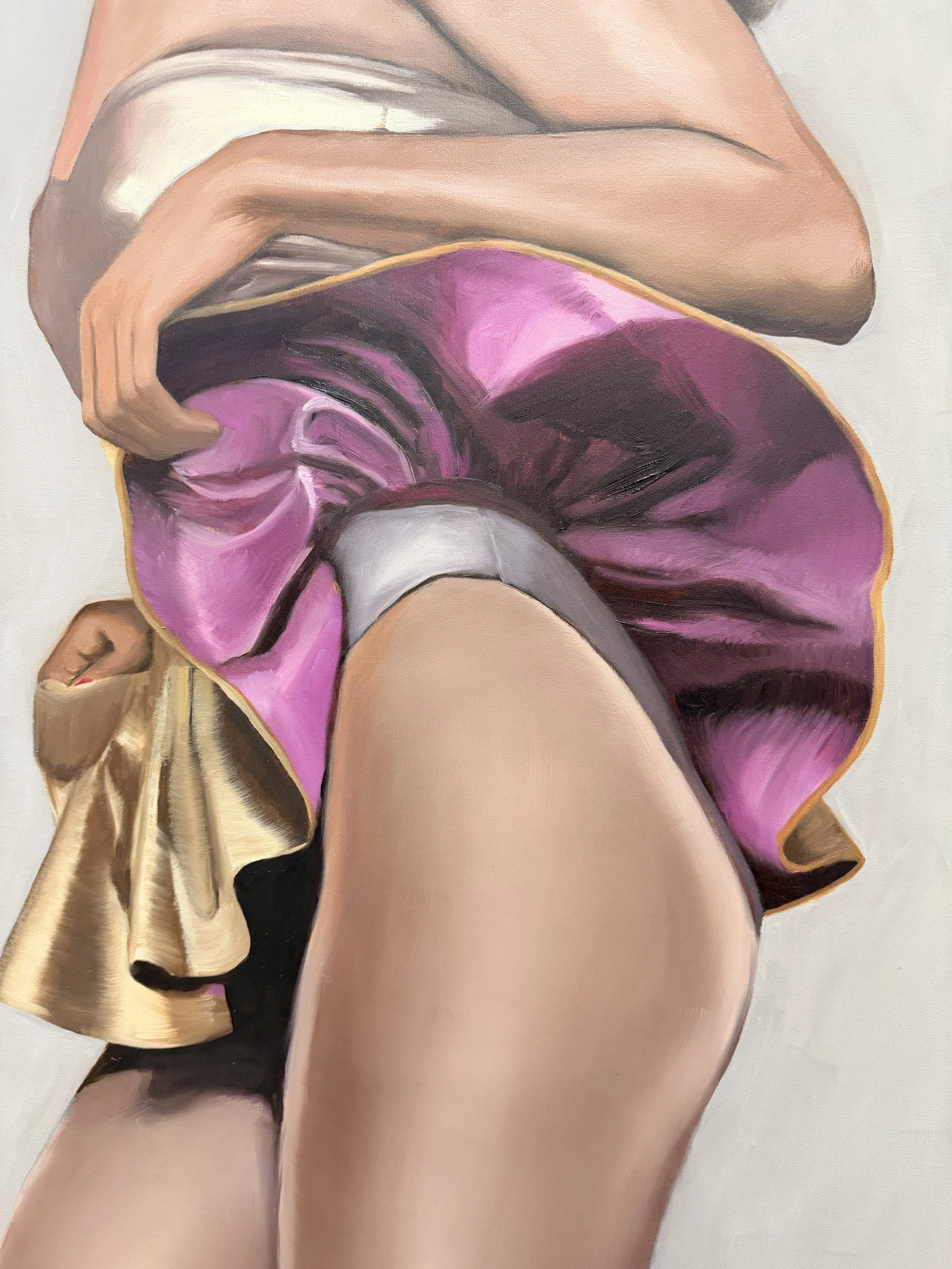
Heidi Yardley’s works at Nicholas Thompson Gallery “draw upon the visual languages of film noir, surrealism and the occult.” Yardley’s works felt uncanny, but not jarringly so. The close cropped look at an 80’s lamé skirt being flipped was one flash of a life being lived out over the canvases. A moment earlier in a night that ended with the subject kneeling on the floor, knee leaning over the frame. The works were snapshots of a larger narrative we as the viewer were not privy to, offered up for us to enjoy on Yarldey’s own terms, blanks not to be filled in.
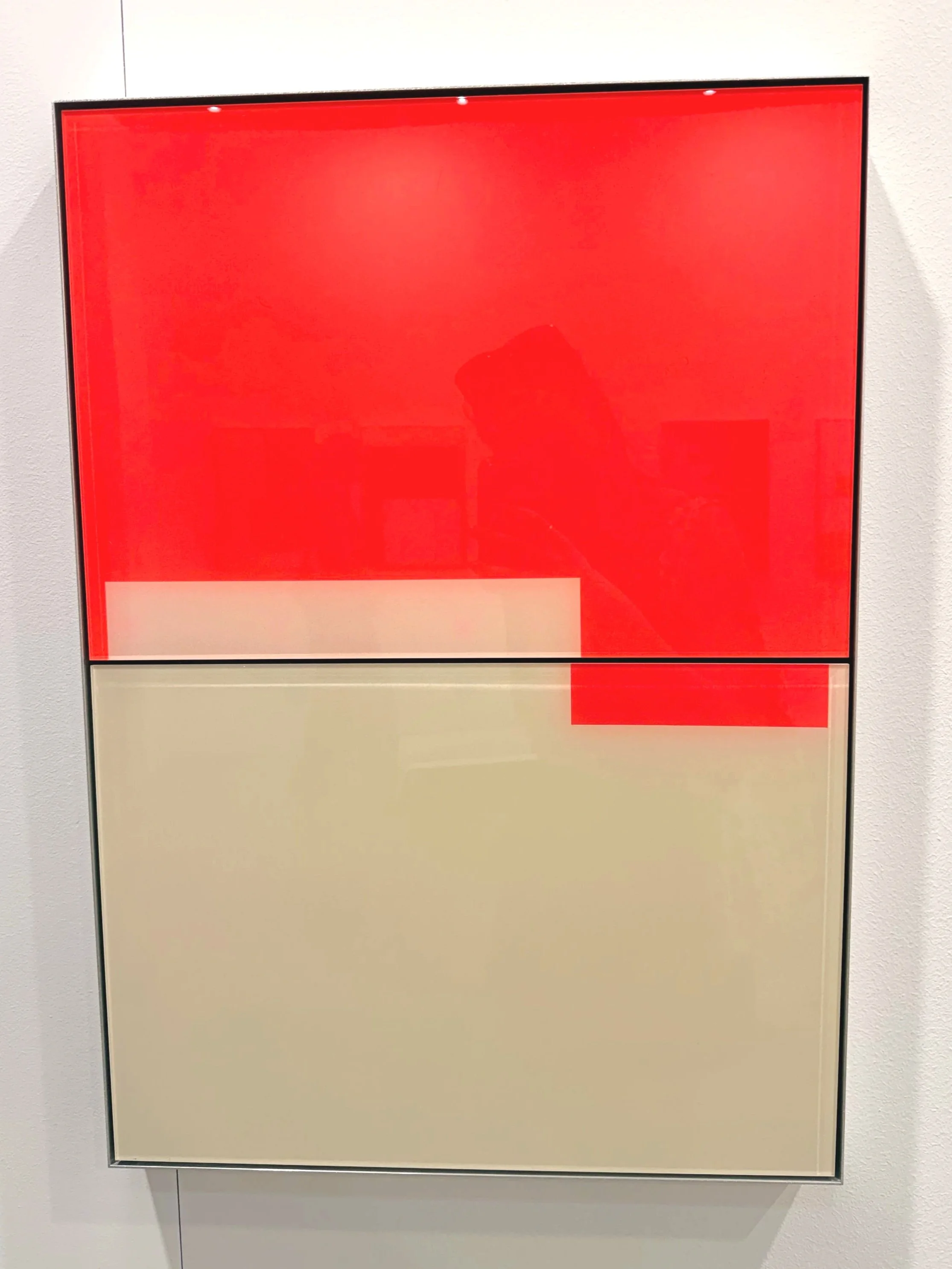
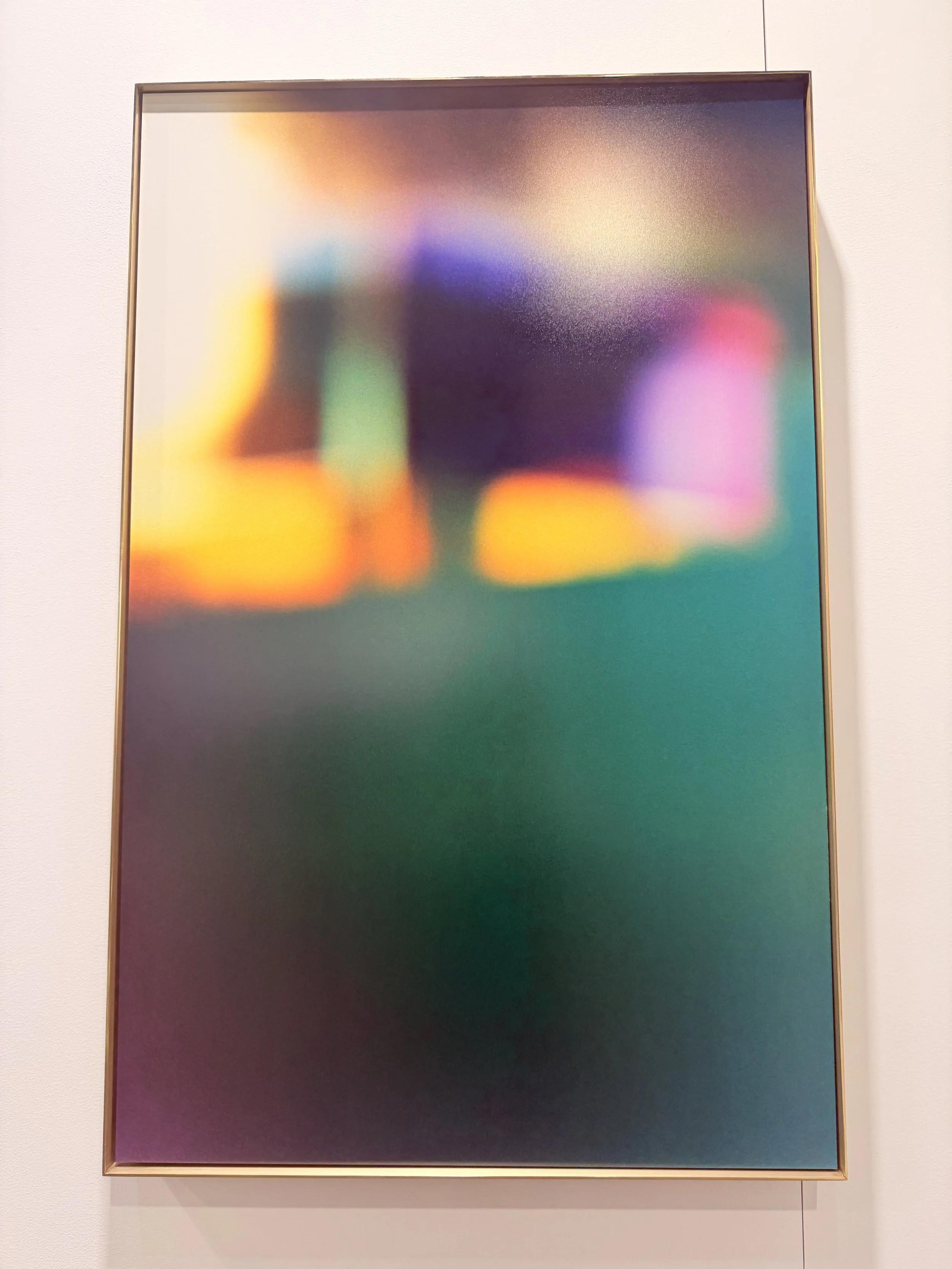
VOID_Melbourne exhibited a suite of Alex Walker’s photographs (unique colour darkroom prints in brass frames). There was a dearth of photography at the Melbourne Art Fair, with a few notable exceptions, Walker included. The upclose, abstract images reminded me of what I love most about streetscapes and analogue photography. Walker works with light so well, wielding it as if it bends to her will. Facing VOID was Five Walls, whose showing of Keisuke Matsuura and Sean Hogan was calling to Walker across the aisle. Matsuura’s magnets and acrylic on canvas works reminded me of the backs of vinyl couches, playing with the button stud patterning. They grounded the exhibition space, dividing Hogan’s smaller works from his larger acrylic sheets. In the larger scale, Hogan lost me, but the smaller works were captivating. The more delicate scale made them intimate, encompassing rather than overwhelming. The black and red work specifically reminded me of standing before the abstract expressionists, finding yourself in the work rather than just looking at it.
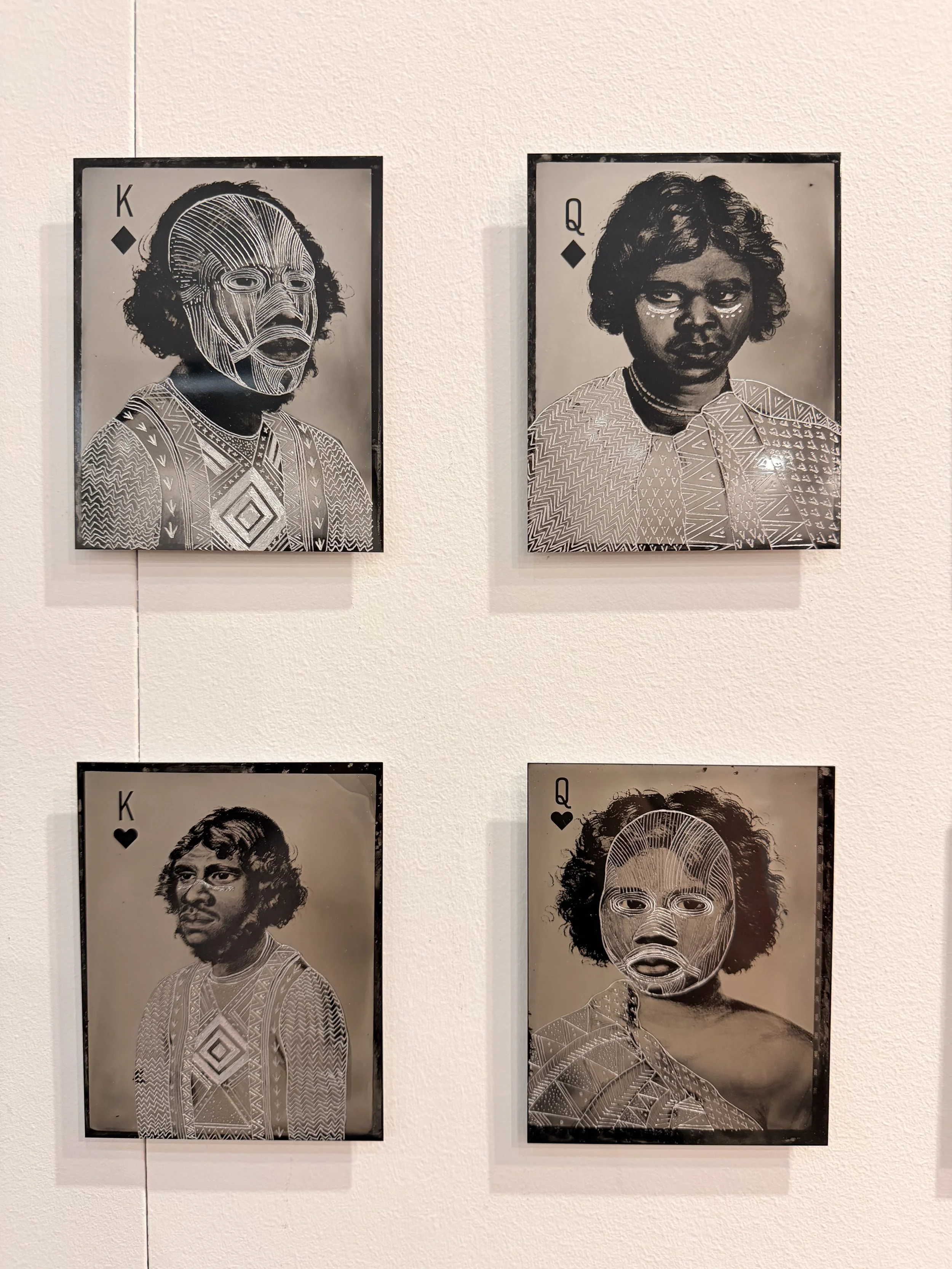
MARS Gallery was a breath of fresh air with their red wall. After aisle upon aisle of white cubes, I was lost. I had a moment of truly not knowing what aisle we’d just been down, and the warmth of the red wall felt like a waypoint, inviting me to stay a while. I spent time at the booth both days I visited, but the work I returned to see multiple times was Damien Shen’s Temporal Legacies. The selection of cards, each an etched tintype is a rumination on everyday imagery we have grown so accustomed to we barely register (I only found out this year each king/queen/jack is based on a real person) and the norms that they present, but also of the history and centrality of card tricks and games. I grew up learning how to play solitaire from my grandparents, and from there have acquired different games from friends throughout the years. Shen’s etched tintypes felt like nothing else at the fair — I’m extremely sad to learn I missed his live presentations.
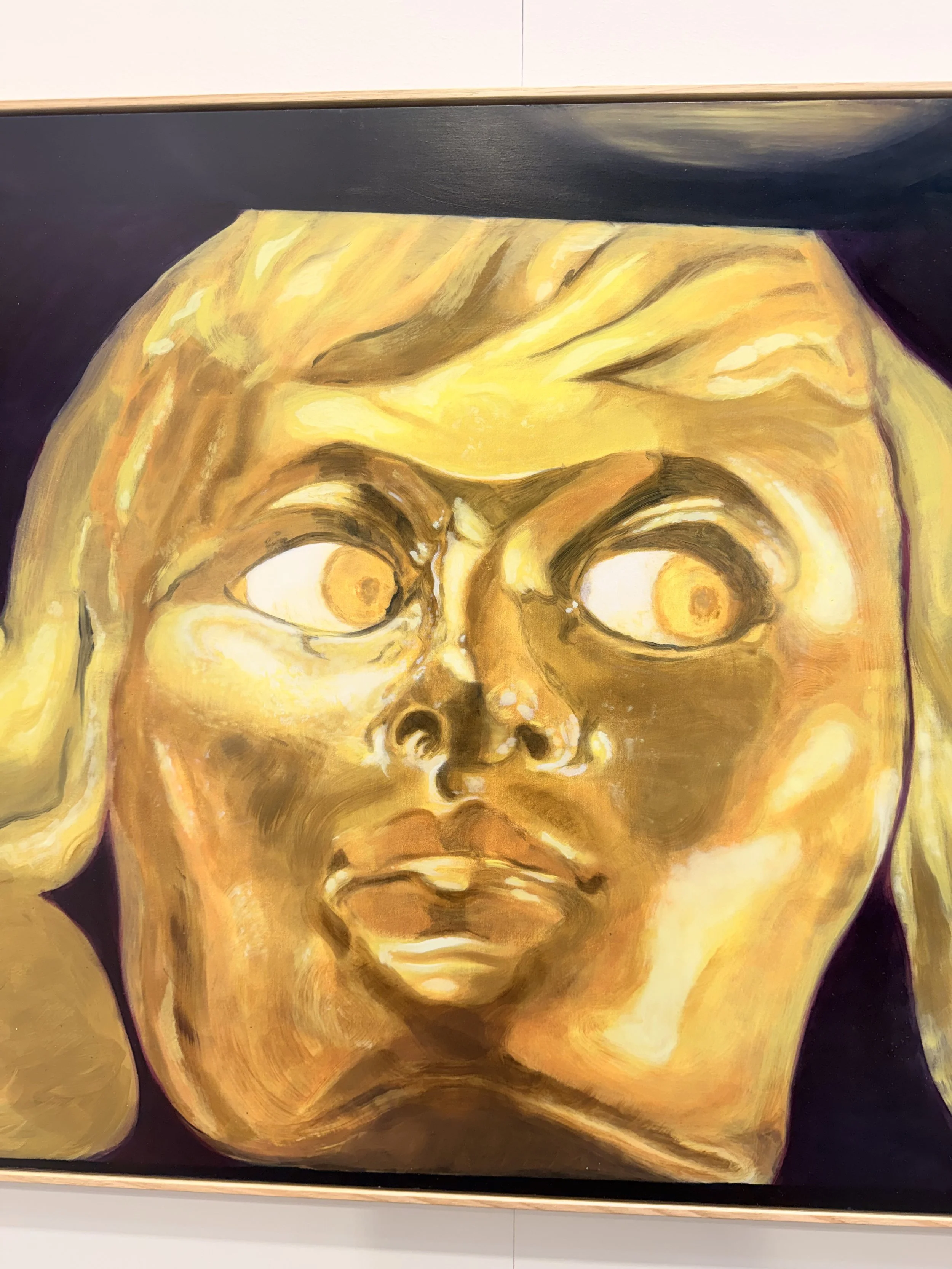
Daine Singer brilliantly showcased Clara Joyce and Maggie Brink together, and was my favourite booth of the fair. Joyce showcased both resin and works on canvas, all of which felt cohesive and carefully considered for display together. Maggie Brink’s paintings both made me laugh and were slightly off-putting, a true hallmark of brilliance. In a convention hall that felt full of one-note works and series, Brink was a revelation. Non standard contractions (Lex yeux sans visage) had Bec and I both cocking our heads, wondering what was playing out. Her golden face (facials, timing, energy! (perfect as a banana and deeply limited)) is my mask of Agamemnon. Many artists have contended with our reality/true crime/Real Housewives obsessed culture in a way that reduces it to two-dimensional ‘culture is dead’ posturing. Brink shows us that the X-Files is, in fact, high-art worthy — while also making an art out of titling artworks.
I love an art fair — perhaps more than my Lowbrow coverage could ever really touch on. I’ve written about the history of them, will speak at length about the World’s Fair to White Cube pipeline, and will forever want to go to them, though covering them on Lowbrow is always a bit strange. They’re a key part of the arts ecosystem, if an inaccessible and impenetrable one: glamorous and fun and expensive and certainly not lowbrow.
A huge thank you to previous contributor Stella Wadeson at Agency who provided us with passes to the fair. We’re a small publication, and paying to get into exhibitions is far out of budget for us, and the passes from Agency allowed us to round out our coverage of Melbourne art fairs, which began with our press invite to Spring1886 in August 2025. (Bec’s note: Melbourne Art Fair notably denied our inquiry to attend as press to this one, maybe next year?)
The Melbourne Art Fair was from February 19-22 2026.