Melbourne Sculpture Biennale
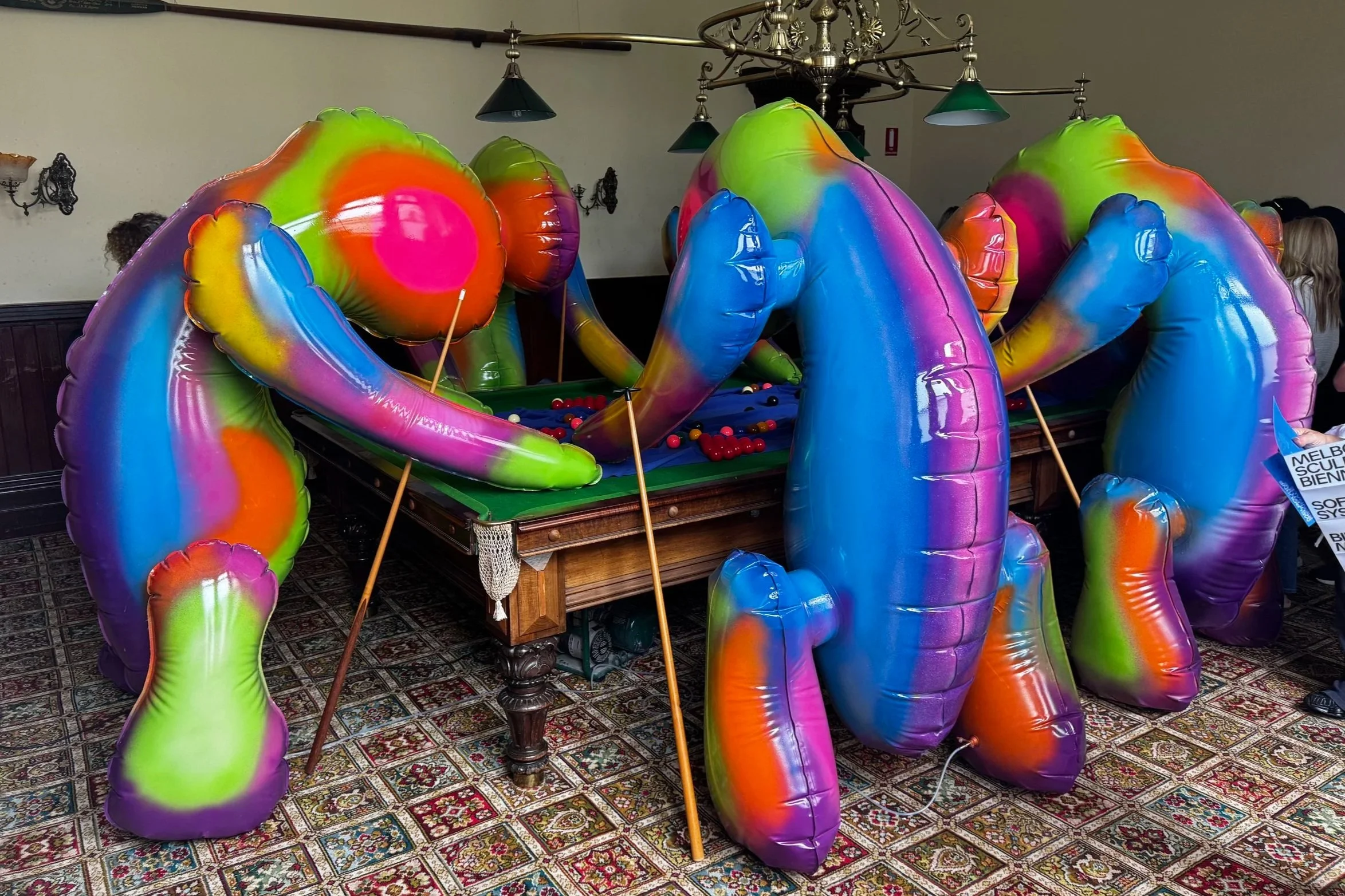
Christopher Langton - Situation Room (snookered)
Getting to Ballilla Mansion was a trek for me. You’ll notice I usually only write about northside and city centre galleries. But! The Melbourne Sculpture Biennale was worth the visit southside, even just as an excuse to catch up with some friends who live in the area and drag them with me to see the show. Housed in a historic mansion built in 1878, the works are site specific and respond to the house itself. Complete with peeling paint, squeaky floor boards, and phallic stained glass windows, the mansion has clearly seen better days, but its dilapidated charm offsets the contemporary sculptures housed within. I’m not usually drawn to sculptural work, and there were many things in the mansion that I didn’t care for or have desire to spend time with, but there were a few that truly stood out.
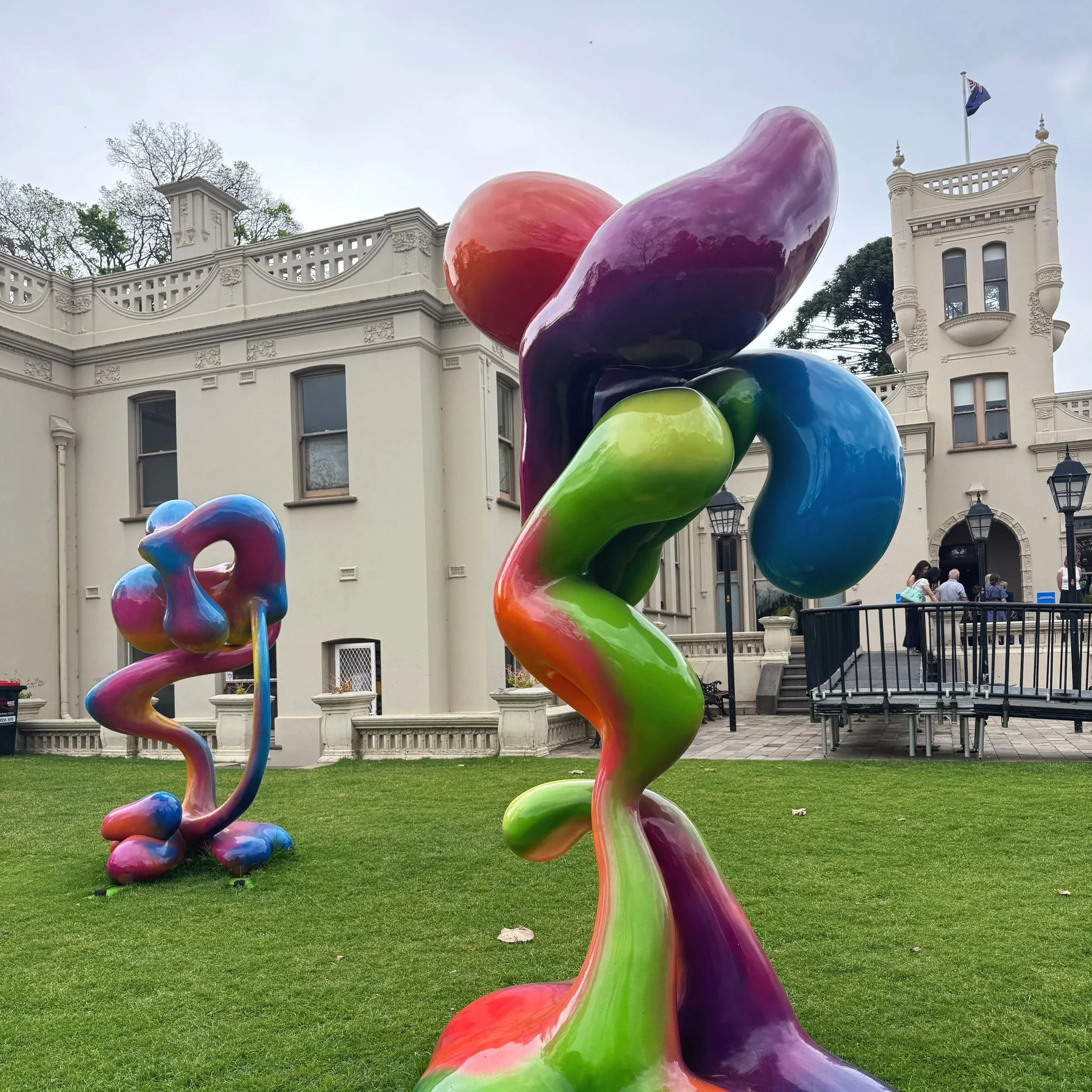
Greeted upon entry by Christopher Langton’s Blossomax, Thornar, and Petalyn - the blobby alien sculptures almost rising out of the grass of the lawn. Their bright glossy colours are stark against the beige exterior of the house, their smooth textureless surfaces alien against the carefully manicured garden that surrounds. Langton’s Situation Room (snookered) inside the house is my favourite work of the biennale. Inflatable creatures crowd a pool table in the house’s Billiard Room, using familiar equipment they play a foreign game. They’re larger than life and eerily humanoid, somehow also reminiscent of teddy bears, while simultaneously being anything but soft. They fill the room so entirely that we’re squeezing round the edges, like you might through a crowded bar - the only things this room needs now are a dark night, a smokey haze, and some low lighting.
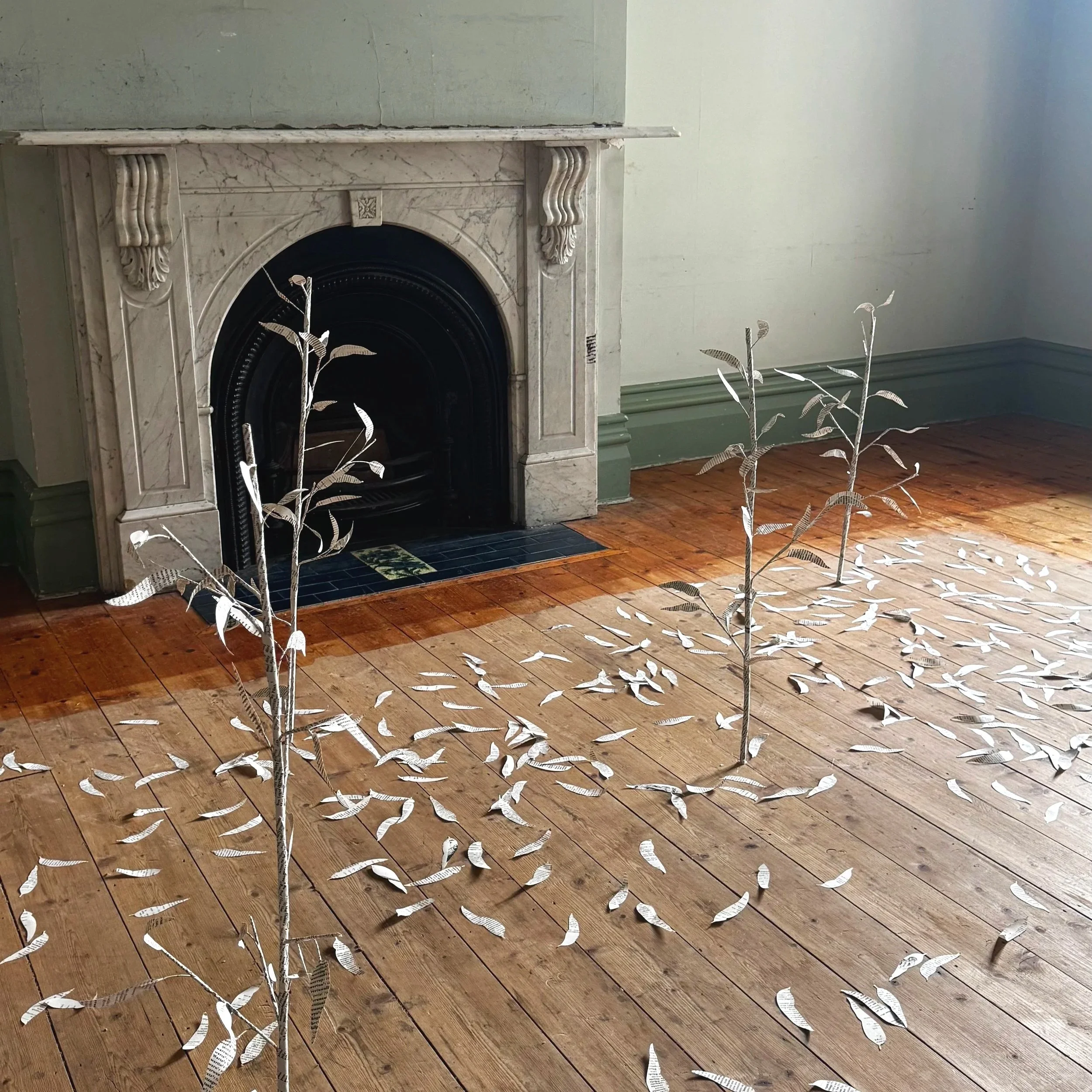
Jenna Mayilema Lee’s Plant with room to grow was a serene calm scene; paper saplings with their leaves littered across the floor - yet the scene is anything but. The saplings are pushing through the floor boards, small eucalypts reclaiming the narrative of this colonial mansion. The paper the saplings are made from was a dictionary of indigenous words, butchered for commercialism, flattened as if the rich tapestry of indigenous languages were all homogenized into one. The leaves sit within the confines of the unvarnished square on the floor, swept under the proverbial rug. We were able to gather from the person sitting the space that Lee was inspired by the pine needles that were littering the room when she came for a site visit, blown in by the wind from the introduced species rooted outside the window. Overall the information about the house, the artwork, and the artists was sorely lacking. We were given a map upon entry outlining which artist was housed where, but no further information except the words of this one volunteer in this one room.
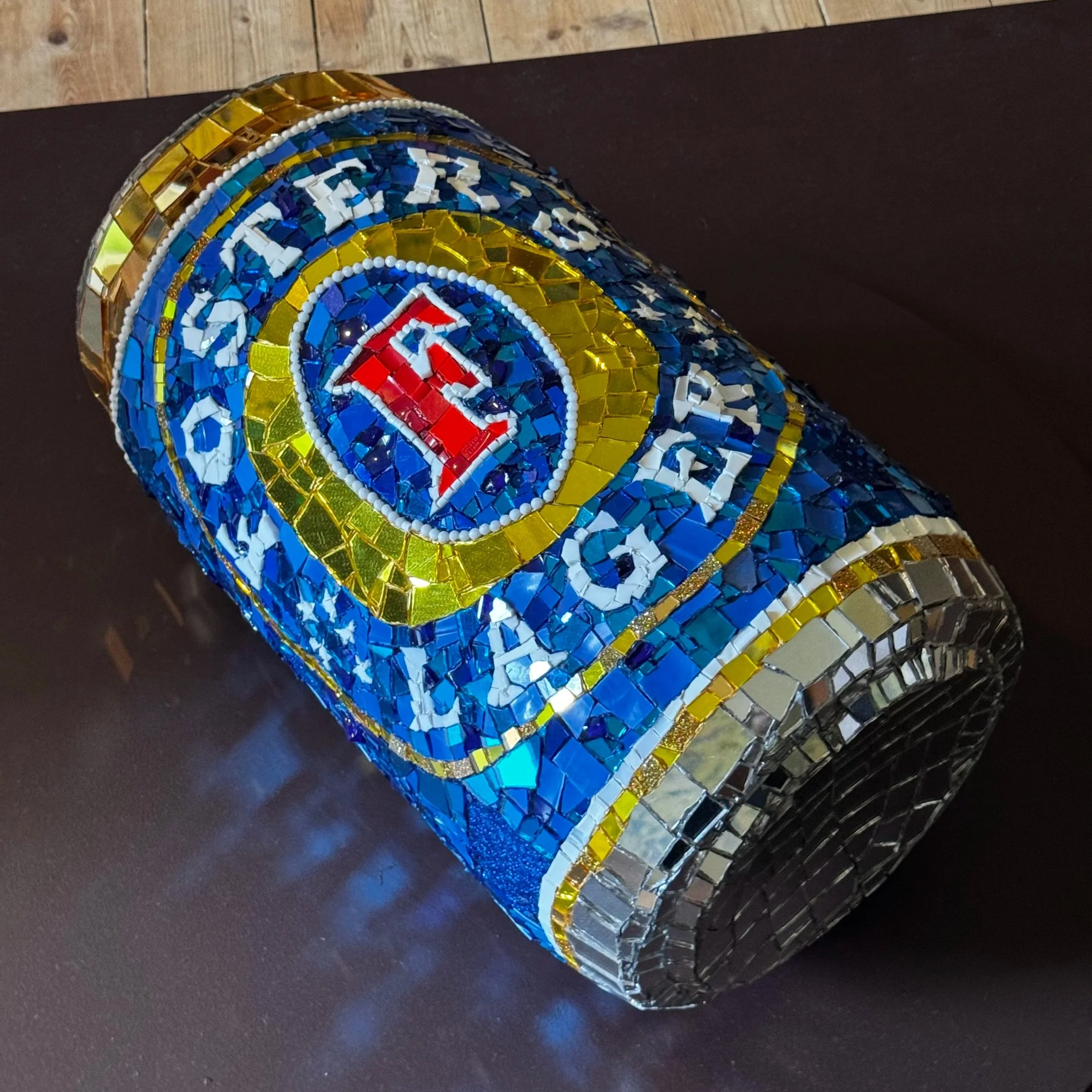
Equally site specific was the nursery rhyme wall paper that clad the walls creating a playful backdrop for Paul Yore’s spinning mirrored disco-balls of iconic Aussie foods. This is the tightest work that I’ve seen from the artist known for his maximalist aesthetic and explosions of colour. The spinning strawberry Big M inspired us to pick-up one for nostalgia’s sake after visiting the show.
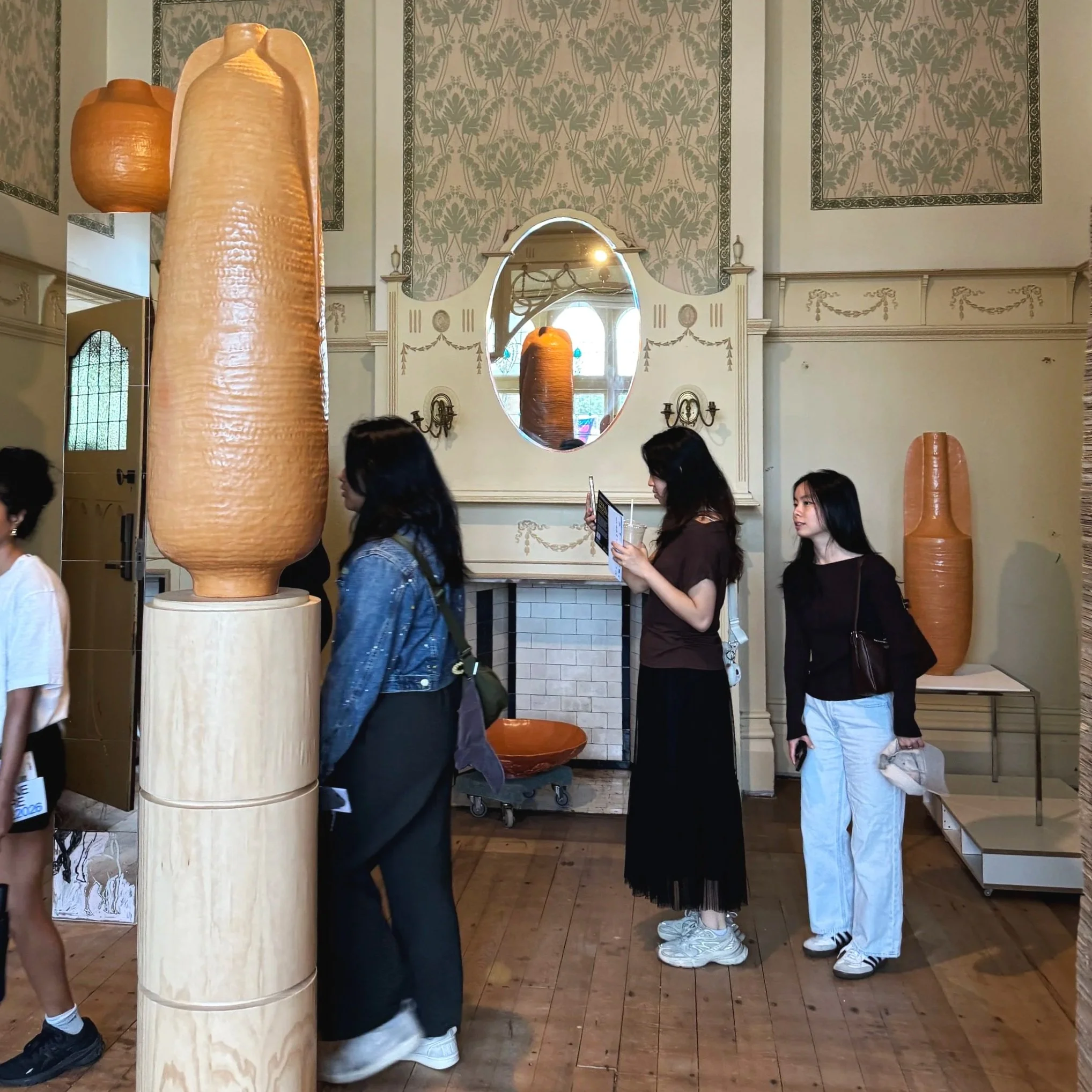
The bookend at the other end of the show was Nicholas Smith’s work. The terracotta pottery sitting teetering atop great plinths made of mirrors, cardboard, pine. The pottery was almost secondary to the plinths constructed for them. Walking between this man-made forest of materials, every step shifting the floor boards, it felt like any movement may make these great pots fall down at any moment. The great joy in the room was of stumbling through the trees to the back corner to find horses painted on the mirrors. Galloping across their great glass plane into the room. You’re only rewarded with the sight if you engage fully and enter the forest. Smith has such evocative humanoid titles for his work such as shaved lip and ribbed body or stained belly and pinched mouth. Highlighting the parts of pots named for the bodies that make them.
Sadly you can’t visit the biennale as it was only on until the 25th of October. Look out for the 2028 edition, wherever it might land!