
Barcode People, Ongwat, Bartolo-Kanellopoulos - KINGS
KINGS Artist-Run is a gallery we’ve sorely neglected here on Lowbrow for the year we’ve been publishing. The gallery, now solidly a West Melbourne staple, started 23 years ago in the CBD and has a rich history for being the proving ground for many artists who have gone on to be acquired by institutional collections, or come full circle as the lecturers now teaching the current group of exhibitors at art school. Currently on at KINGS are three shows; Pith and Seed curated by Gabriella Bartolo-Kanellopoulos, Surplus Pleasure: Load from last checked point.dat by Barcode People, and Do you remember? by Panisa Ongwat.
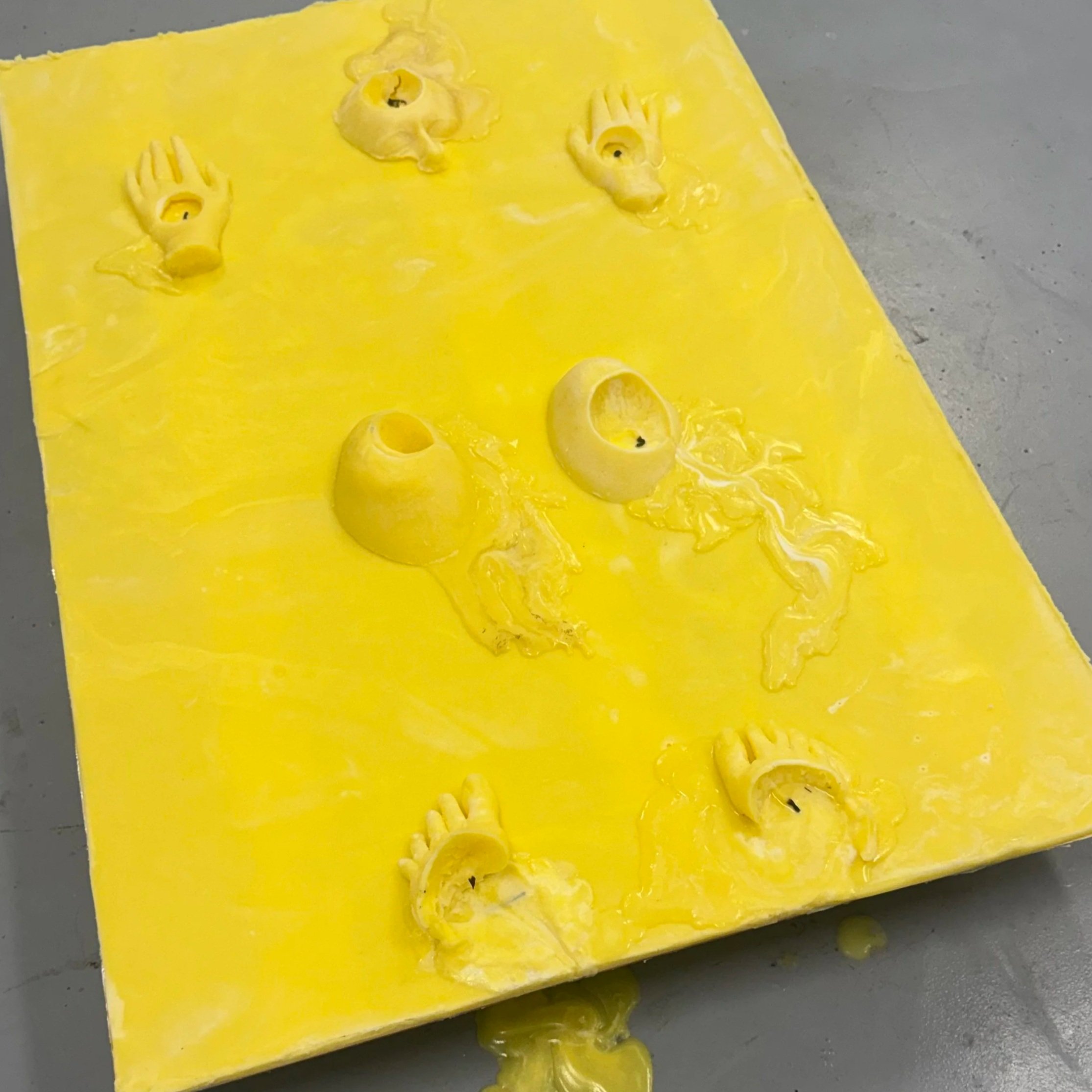
Curator of Pith and Seed, Bartolo-Kanellopoulos, grapples with the cultural traditions that artists inherit, specifically relating to food and ephemeral materials. The tight curatorial vision feels under explored in the essay accompaniment to the show, where I would’ve liked to see the curator explore the exhibition as a whole and answer the questions posed in the introduction, instead of writing about each artist as individual entities. When entering the gallery the work I was drawn to is Mandeep Singh’s Points of Contact which shows the titular points of contact the artist’s body has when bowing, cast into rich ghee. This fleeting moment is captured and held in an equally fleeting material, ready to continue its melt at any second. I can feel the artist’s presence in the room even though the wicks embedded into the block were unlit when I visit the gallery.
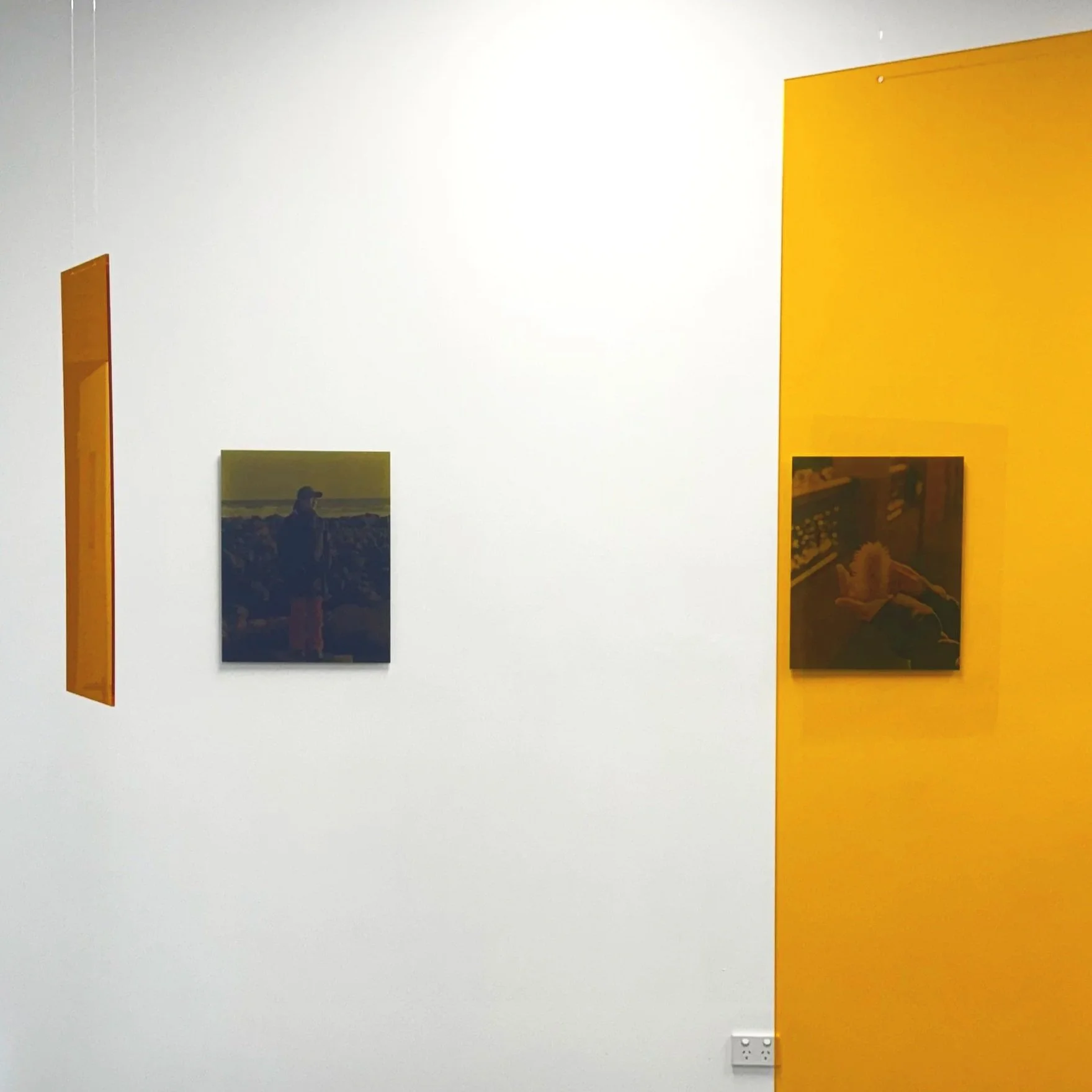
Though they are part of two different exhibitions in the space, the rich colour of Singh’s ghee leads me back to Panisa Ongwat’s turmeric toned show Do you remember? Ongwat uses expired colour darkroom paper and allows the materiality of the colour shifts between prints to reflect on the changing state of memory. The great hanging acrylic sheets in the middle of the space entitled Rose-Coloured Glasses become windows with which to view the photos through, changing and shifting them even further based on your perspective. Memory, and our relationship to those memories, changes as we do, moving with us and evolving alongside us. Clearly I have some strong opinions on writing that accompanies exhibitions, and Ongwat’s room sheet is an instance where the text elevates my experience of the work: “The images are not faithful reproductions of the past, much like my memories. They exist somewhere in between, where remembering and misremembering become part of the same story.”
The jazzy jungle breakbeat backing the Surplus Pleasure video is the perfect accompaniment to the crush of the imagery on the screen. Even though the clips are of retro video games, this work feels like a mirror of the doomscroll; of the constant onslaught of advertising, and content, and overwhelm which we experience from every angle in our contemporary world. The exhibition text has me down a rabbit hole into Žižek’s concept of Surplus Pleasure, the idea of an extra, almost useless layer of pleasure that we get from the very process of desiring, chasing, or even giving things up, rather than from actually getting what we want. Barcode People, composed of Qihao Liang and Tong Shu, have drawn a perfect parallel with this concept to video games where the joy is found in the game play and not the achievement of finishing the game. I stayed with this video work for a few cycles of its 4 minute run time, finding new things to enjoy on every watch. And I want this creative duo to drop the audio on a streaming service near me ASAP — I would become their top monthly listener.
I can’t tell if I view these three shows as three separate entities, or if their presentation alongside each other, intentionally or not, changes my understanding of the works on display. You can catch these three shows at KINGS until August 16th and decide for yourself.