
Bottom Shelf: The Lonely City by Olivia Laing
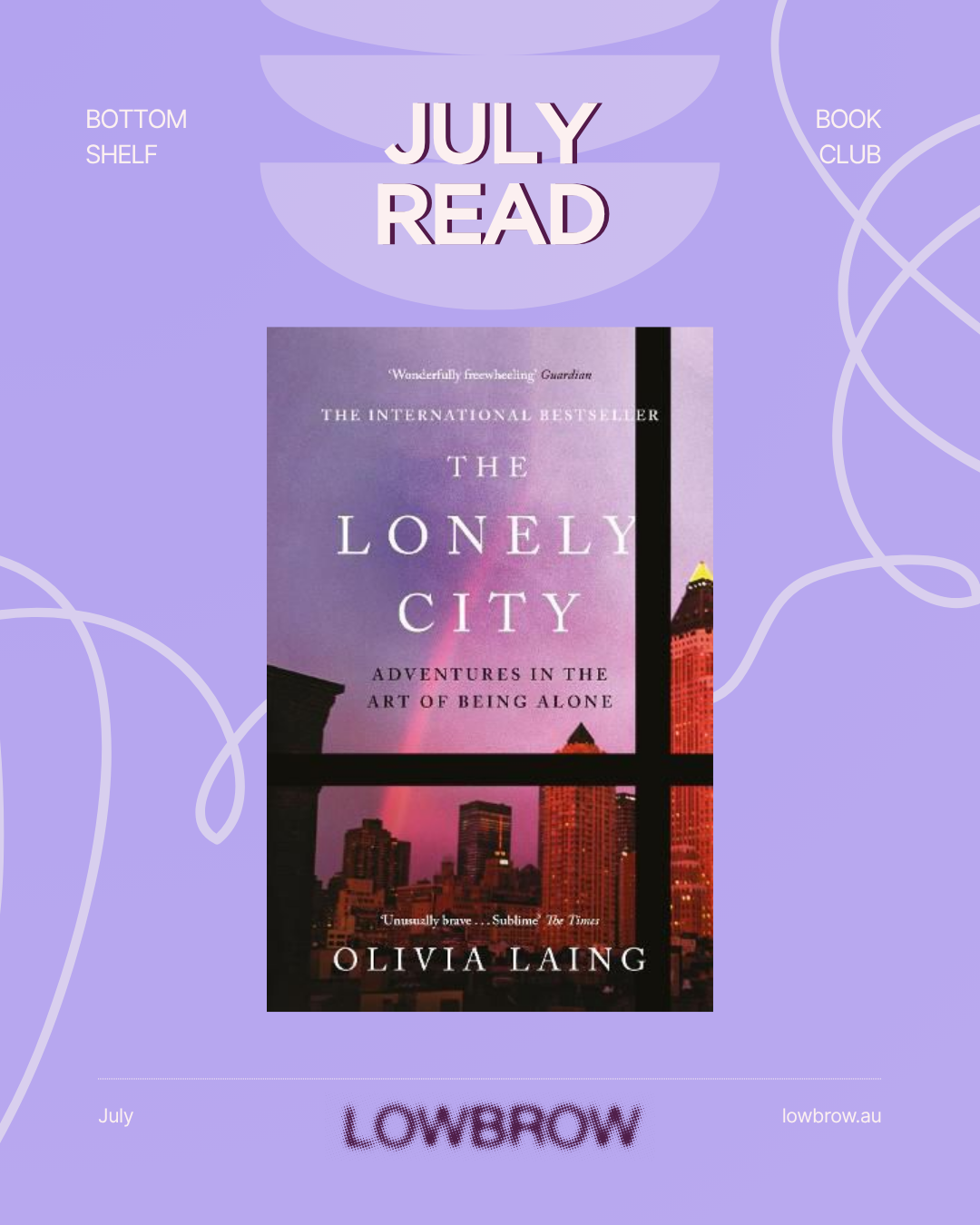
Olivia Laing is perhaps the author I recommend to those with a passing interest in art criticism, or just good writing. They capture the essence of things without bogging you down, expanding your understanding without talking down to you. It can be read straight through, or copiously noted and annotated, a starting point to go further. It’s the kind of writing that makes you a better reader, and a better writer in turn for that. Laing’s prose has turns of phrase I want to sink my teeth into: “the glowing clamshells of their laptops”, “the rest are simply openings, apertures”, “palliative to loneliness.” My list could be endless, my notes surely feel that way.
Laing captures the flavours of loneliness and the gulfs between them. For some, it is a temporary stopover, others find it to be their home. In exploring loneliness through artists – Hopper, Warhol, Henry Darger, David Wojnarowicz – they carry you through a narrative that flows, unfurling like a novel, with a rhythm much non-fiction eschews. Chapters begin with Laing situating themself within New York, what was occupying their time, how they came to that specific artist and their lonely world.
Being alone is not being lonely. I think about these differences often, even more so in recent weeks since starting this book and covering ACCA’s Are you lonely tonight? I’m so lonesome I could cry. Some of the times loneliness is most acute are when you are surrounded by people – on a dancefloor, on a plane, in a class – but there’s no real connection happening. I live alone, and am lucky enough to have done so for most of my adult life. There’s a learning curve in being able to be alone without being lonely, which Laing explores so beautifully. Moving to a new city is one of the most isolating experiences, especially when you do so without school or a job to ground you on the other end. Originally planning to move to New York to be with a partner, Laing still moved when the relationship fell through. Their aborted relationship finds its echoes in the stories of the artists as well, leaving us, the viewer, to notice the echoes Laing fixes on. Though part memoir, Laing does not draw you in with salacious detail. It is a crushingly personal narrative, and we’re allowed glimpses at the author behind it – of being raised by lesbian mothers in 1980s Britain, of the physical reactions they had to reading Drager’s diaries, of the references made – without giving it all away.
Who are the artists of your loneliness?
Did Laing’s scope of artists feel limited? And why?
Laing quotes Hopper as “[trying] to paint himself, not the world.” Is this book a reflection of the world, or the author? Who is your creative work a reflection of?
For a book about loneliness, it contains a stacked list of names (4 pages of my notebook are littered with them.) To borrow Laing’s own words, it’s a “highly populated isolation.” I took notes of the names because I am enamoured by the references people make, the implicit and explicit, conscious and unconscious. The names we populate our worlds with not only show where we’re getting our information and what our touchstones are, but also a view of the world through the eyes we inhabit, how we see ourselves in relation to them.
The book ends with a further delve into what loneliness is coming to mean in a world where we are more connected than ever. We’ve emigrated online, losing our connection to gentrification in person, but also the gentrification of the algorithm, losing what the internet used to be. Who among us has not mourned what it meant to log off, when you did not carry the world in your pocket, and instead left it in the family computer?
Bottom Shelf is Lowbrow’s monthly bookclub. If you had any thoughts on The Lonely City, or have a suggestion for a future book, please contact Charlotte at bottomshelf.lowbrow@gmail.com
Graphics courtesy of @alicebeyerdesign