
Bottom Shelf: Spiral Jetta by Erin Hogan
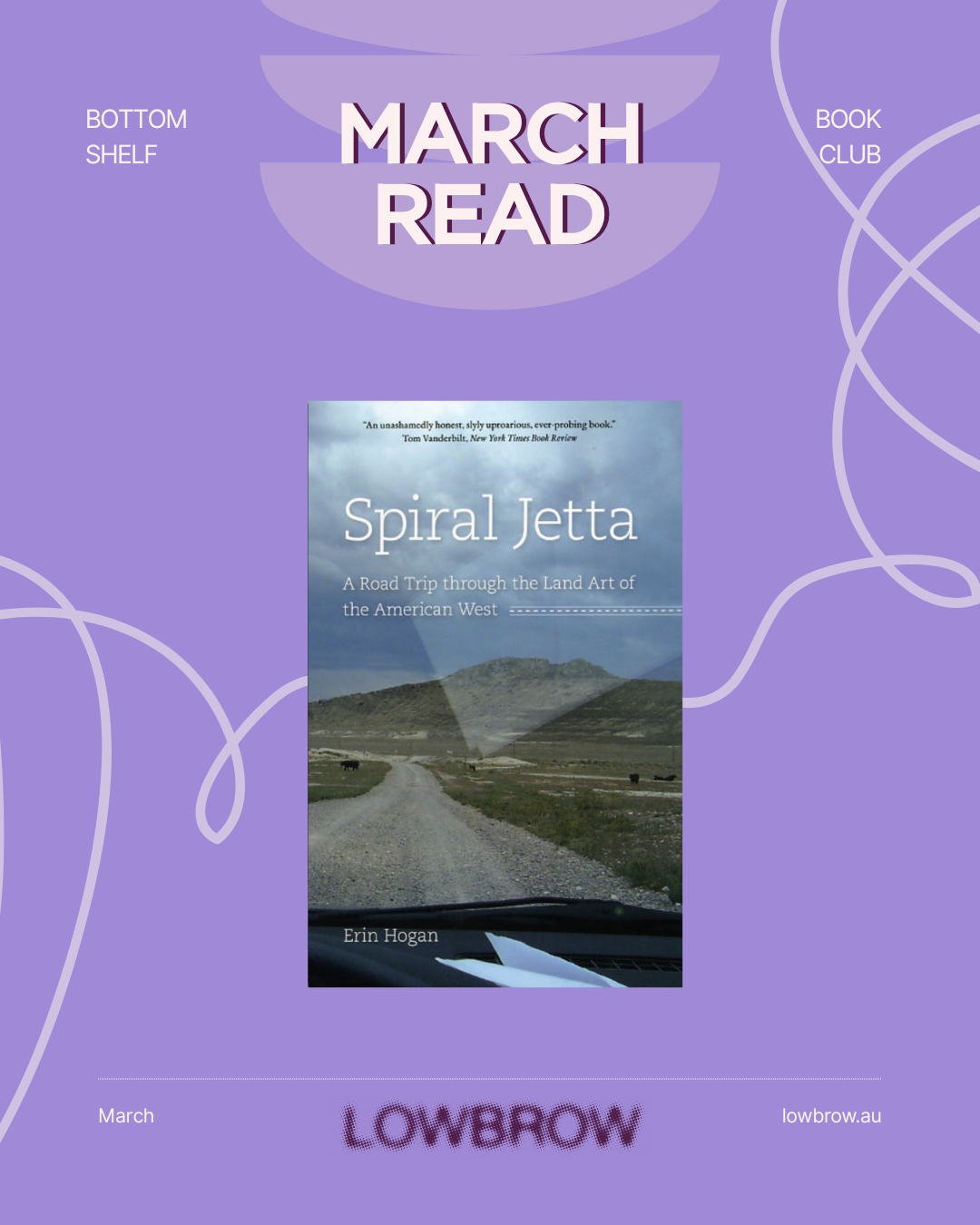
Erin Hogan embarks on a solo journey across the American West in search of Land Art. The 2008 book is deeply reflective of current anxieties for arts in Australia, with funding cuts, a world in turmoil, and an internal search for place in an uncertain world.
Welcome to Bottom Shelf. Here, you’ll find monthly book reviews of an arts/criticism/culture/literary work that has been resonating with me/us/our Lowbrow community. My hope is to read widely, with the lens always focused on how the text fits into the exhibitions I’ve been seeing and the learnings I’ll take from it. Our first book for Bottom Shelf is personal to me, because in most ways that matter, it’s where I can trace my realisation that art and curation and criticism is a viable career option (until Creative Victoria cuts funding again).
I read 5 books this month (the highlight being Weird Fucks by Lynne Tillman), but Spiral Jetta was always what this first edition of Bottom Shelf was going to be centred on. This is not my first time reading Erin Hogan’s Spiral Jetta. My copy is worn, the edges rounded, the cover peeling. I got a copy of Spiral Jetta (along with the Duchamp Dictionary) for my 21st birthday, gifted by a close friend who has throughout my life had the coolest art, best clothes, and most fantastic collection of books, and thus has always existed in my life as an authority on culture and taste.
Hogan travels through the continental United States in her Volkaswagon Jetta, leaving her job in Chicago to tour through some of the greats of American Land Art. She hits Robert Smithson's Spiral Jetty, Nancy Holt’s Sun Tunnels, Walter De Maria’s Lightning Fields, Michael Heizer’s Double Negative, Marfa, Texas and Juarez, Mexico (the last two are not Land Art, but are touchstones of North American art nonetheless). My thoughts on the book are abbreviated, focused on the last three chapters, where I find Hogan hits a stride, then falters, then returns to close the book well. She without doubt writes about art well, but the world outside of it, outside of the American art she has come to see, feels more otherworldly in her words than any giant salt flat spiral.
Hogan’s writing of the Mexican border town Juárez is othering and deeply American. Hogan treats the town itself as if it is a living art installation, completely alien to her life and the art she has been seeing throughout the United States. In every reading of this book, this chapter, the othering, turns me off, making it harder to want to finish the 40-odd pages remaining. Juárez was a complicated place then, further complicated now given the American government’s anti-immigration policies, and increasing violence along the border, but also the increase in Americans decamping and vacationing in Mexico, heightening social divides.
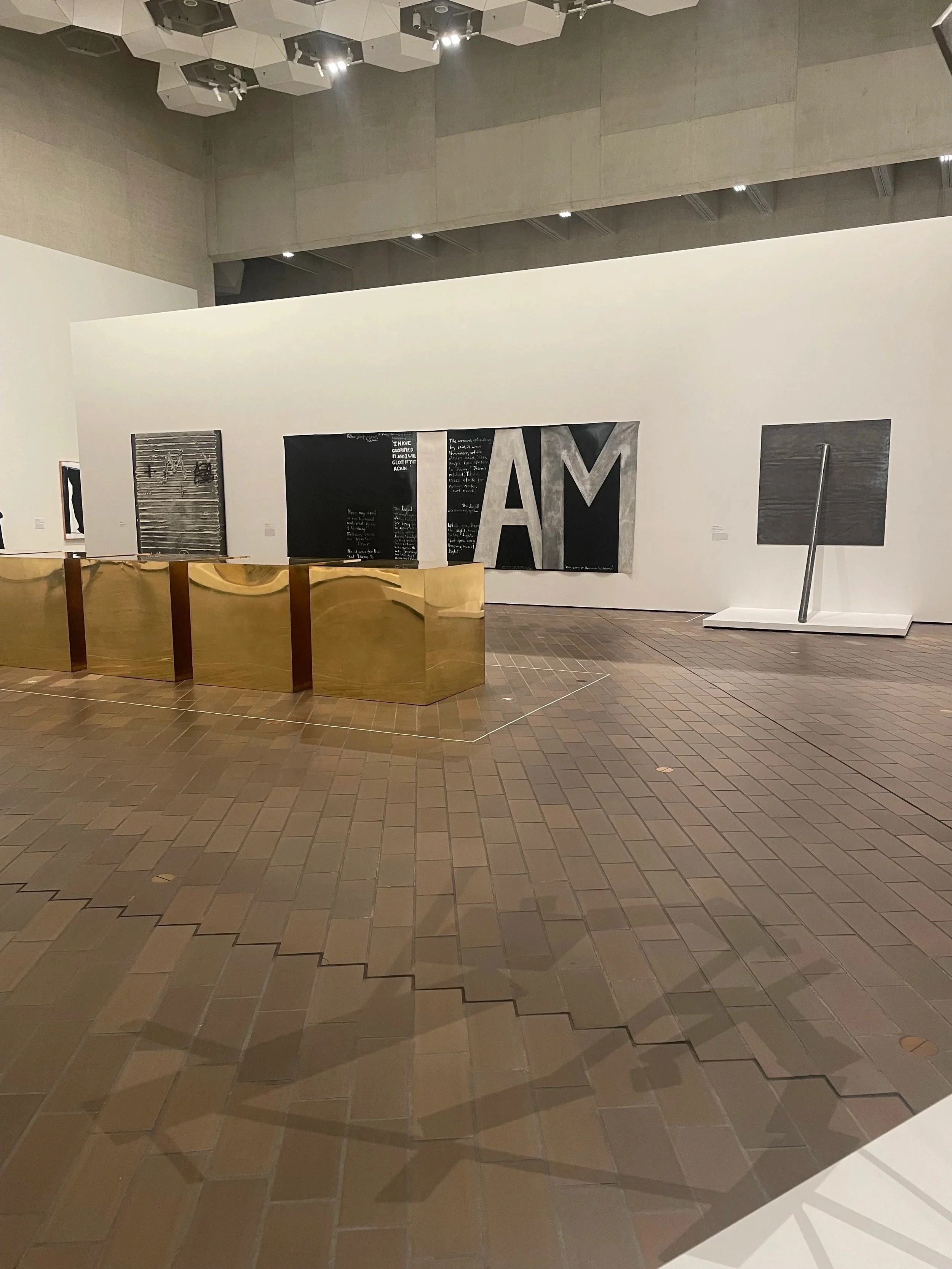
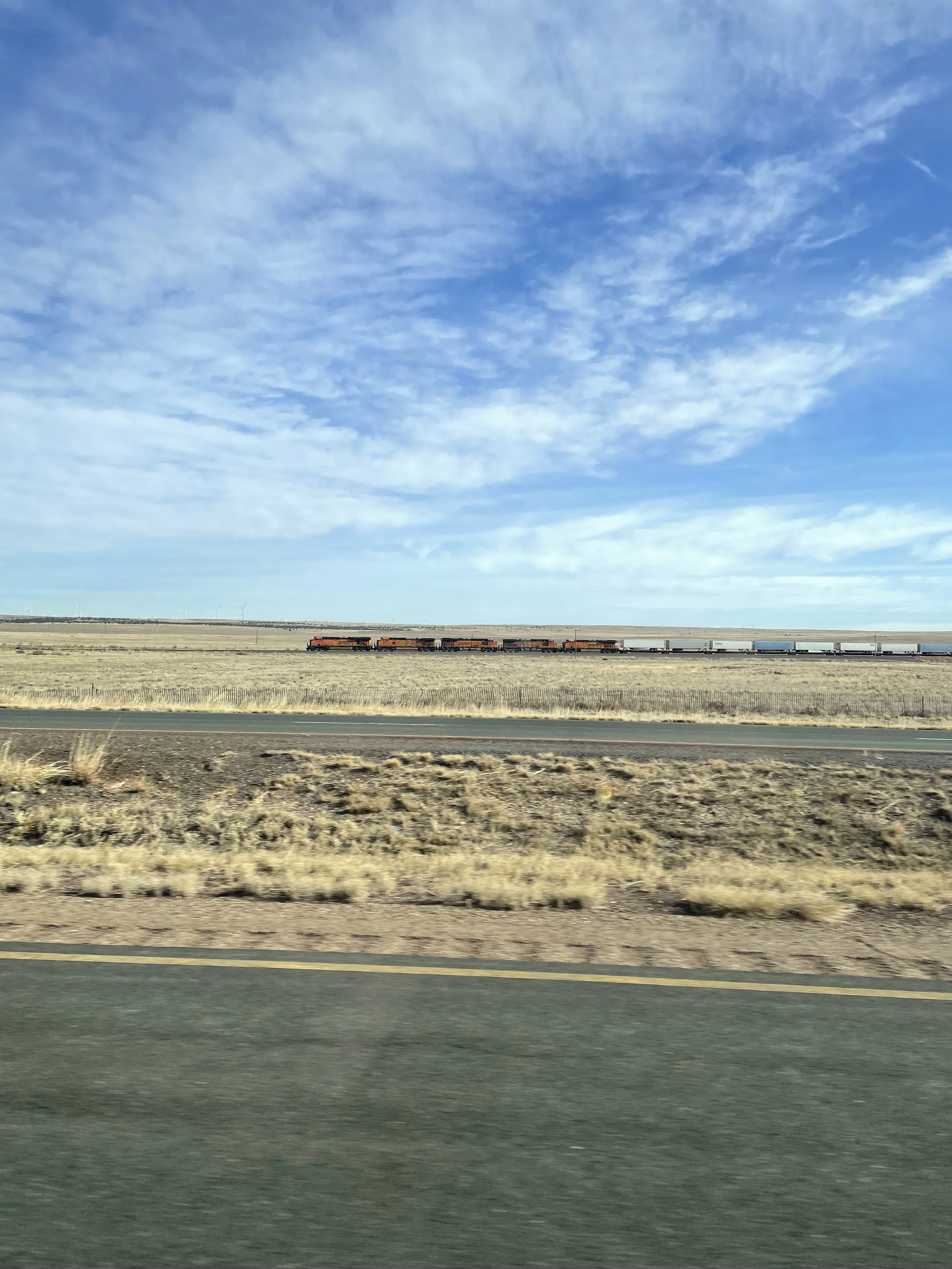
The penultimate Juarez chapter stands in the way of the wealth of knowledge in the final chapter, dedicated to Marfa, Texas. Having existed on my bucket list for nearly a decade now, the descriptions and placing of Marfa within the post-war American art movements raised it to near mythological status in my mind. On first reading, I spent hours on YouTube going through every video touring you through Donald Judd’s workshop and the town that has reshaped itself around it. Every time I go to the NGA, I pay a visit to the Judd works on display, a large part of my appreciation for them having stemmed from Hogan. Marfa is described in all its complexity- the divide between the arts scene and the blue collar town that it is subsuming. The real tensions that exist there, the dangers of reshaping a town in your own image.
What really struck me on my rereading for Bottom Shelf was that the final three chapters – Lightning Fields, Juárez, Marfa – all take place on the same day. Hogan’s odyssey is not 20 years, but mere days where she pilgrimages to sites that take months to dissect in art history courses. Even land art does not exist in a vacuum or on its own. It’s traversable, accessible with time and a car, and knowable.
If you read Spiral Jetta, email me at bottomshelf.lowbrow@gmail.com. I want to know your thoughts. Also let me know if there’s anything you think I should read/if you have feedback about the length (I am happy to send you my full thoughts on the whole book but having you read my thoughts is easier when the word count doesn’t creep into the thousands). My dream for this is to have a real discussion and a real recording of books that shape our perceptions of the arts, for better or for worse.
A huge thank you to Alice Beyer (@alicebeyerdesign) for making Bottom Shelf’s social media graphics.