
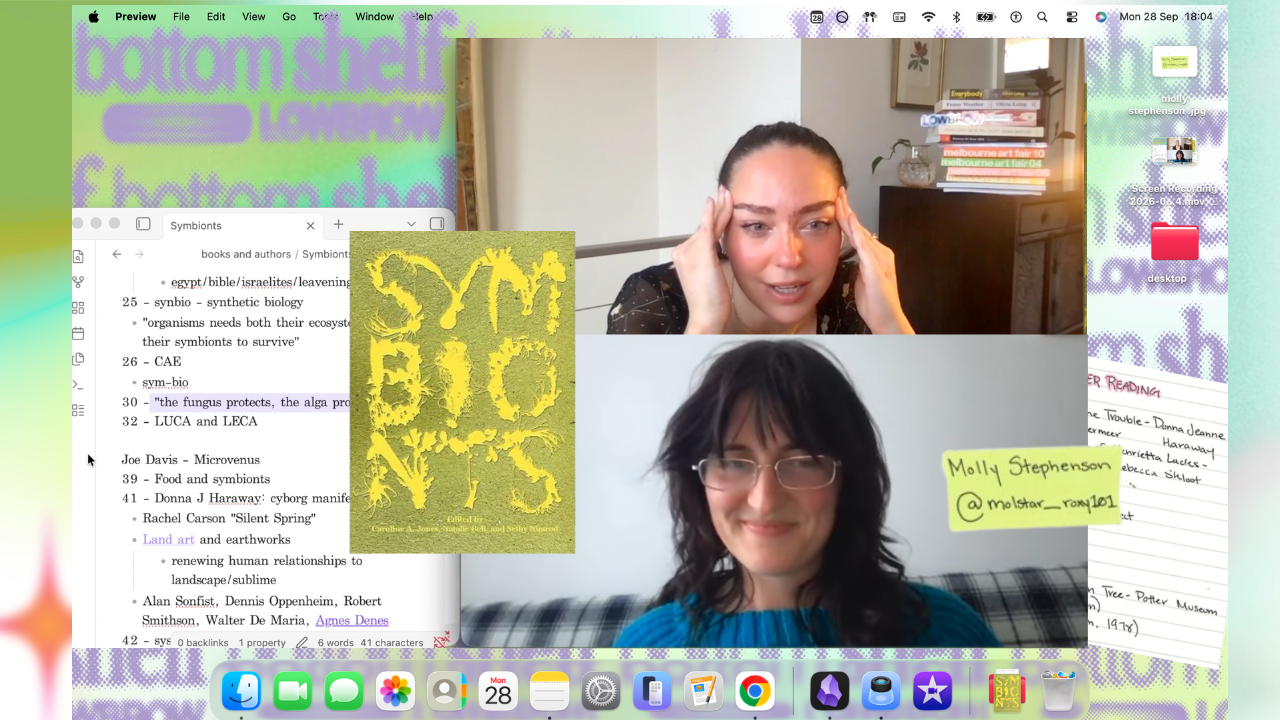
Bottom Shelf: Symbionts with Molly Stephenson
Welcome back to Bottom Shelf, Lowbrow’s very own art book club! After a month off, we’re back and in video! Though the written component of Bottom Shelf will always be central to what I want to do with it, the main reason I started Bottom Shelf (and conceptualised it years ago) was to connect with people about art over books. I’ve started off by inviting Molly Stephenson on to talk about her pick, Symbionts. I met Molly a few months ago when we were introduced by Bec at an opening and bonded over our shared love of annotating art books. I first came to know of Molly in 2024 when I bought one of her works from No Vacancy.
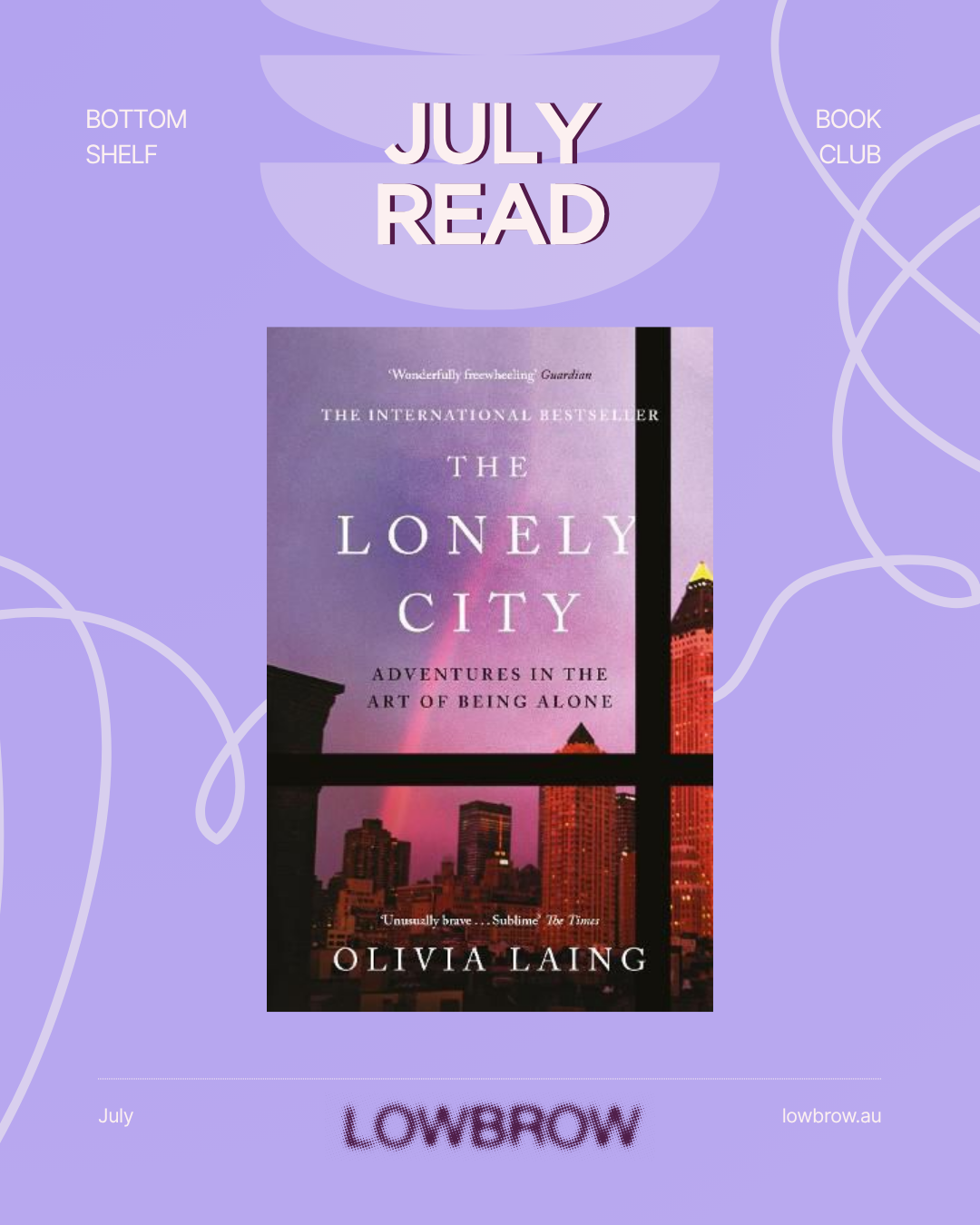
Bottom Shelf: The Lonely City by Olivia Laing
Olivia Laing is perhaps the author I recommend to those with a passing interest in art criticism, or just good writing. They capture the essence of things without bogging you down, expanding your understanding without talking down to you. It can be read straight through, or copiously noted and annotated, a starting point to go further. It’s the kind of writing that makes you a better reader, and a better writer in turn for that. Laing’s prose has turns of phrase I want to sink my teeth into: “the glowing clamshells of their laptops”, “the rest are simply openings, apertures”, “palliative to loneliness.” My list could be endless, my notes surely feel that way.
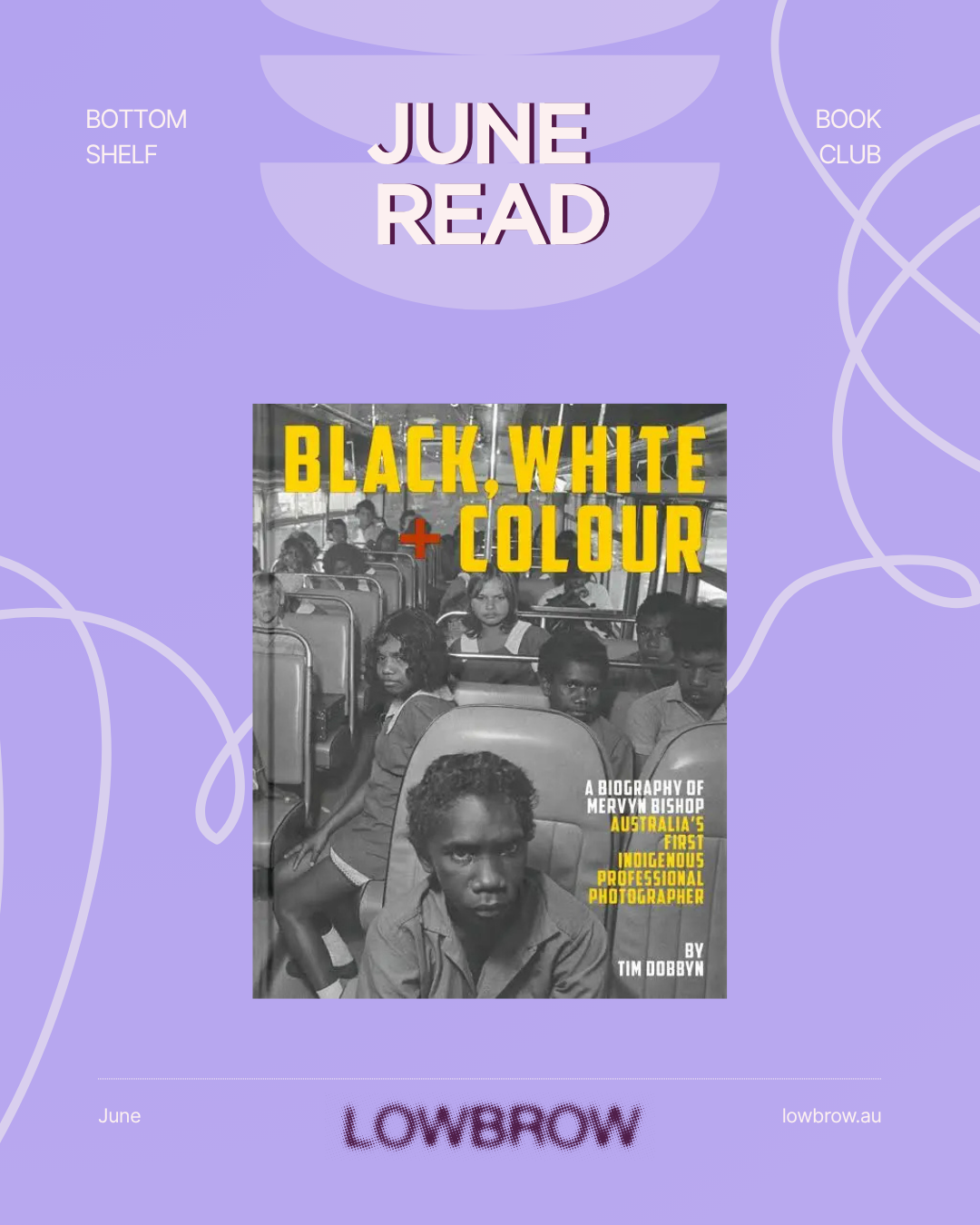
Bottom Shelf: Black, White + Colour by Tim Dobbyn
Much in the way there is no truly impartial writer, there is no perfect biography. Black, White and Colour is no exception. A biography of Mervyn Bishop, hailed as Australia’s first Indigenous professional photographer, I found this to read like a story half finished – too short, dancing over the stickier parts of Bishop’s personal life and relationships, not allowing facts and realities to breathe. It’s an issue that rises again and again with biographies written while the subject is still living, and when they have a heavy hand in the shaping of the narrative.
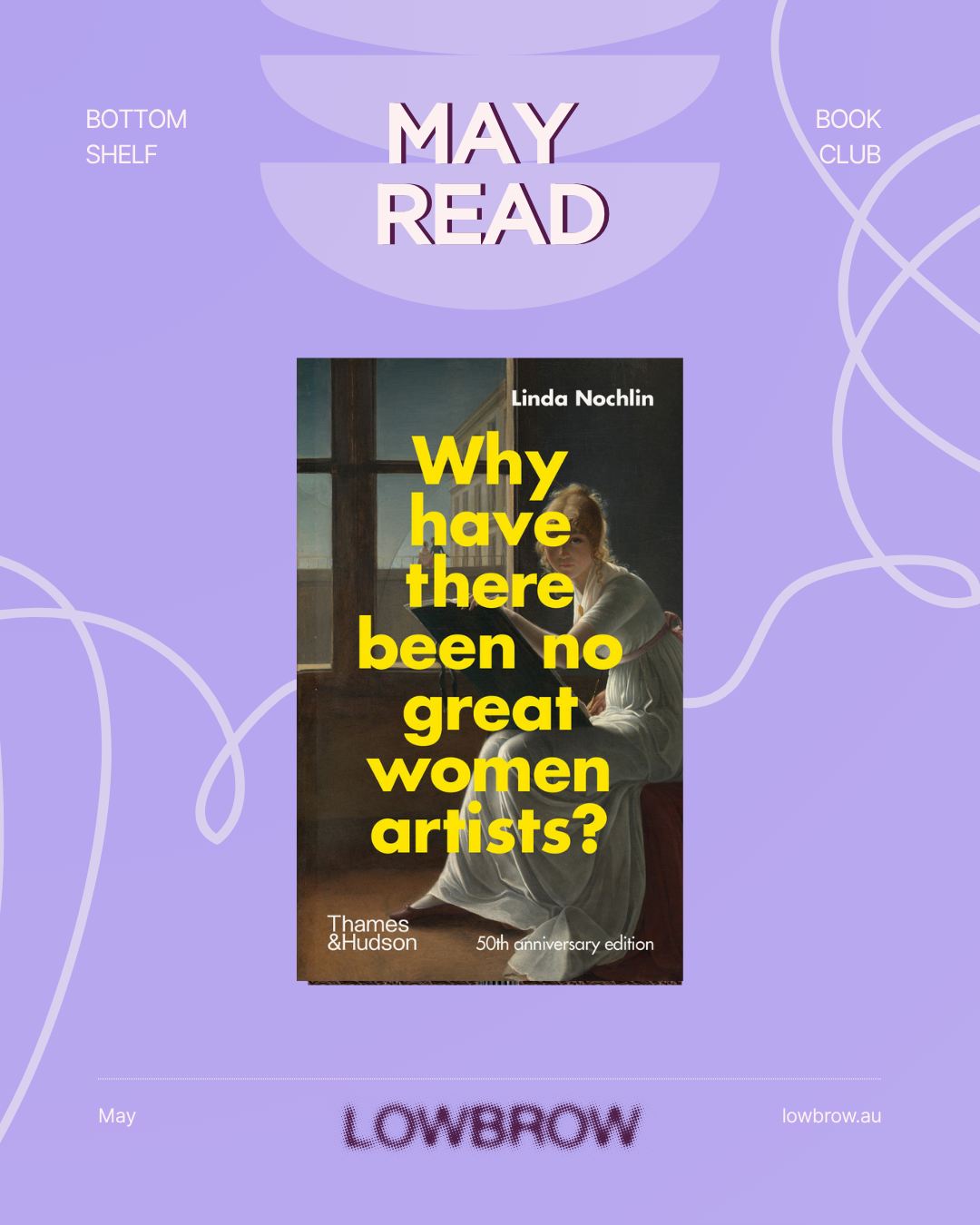
Bottom Shelf: Why Have There Been No Great Women Artists? by Linda Nochlin
Rereading Why Have There Been No Great Women Artists? is an annual experience for me, often precipitated by a friend saying they haven’t yet pulled it up. A foundational text, if not the foundational text of looking at feminism(s) in art history, Why Have There Been No Great Women Artists is an essay that is never far from my mind. From first reading it at 19 in ARTH101 in undergrad, I’ve variously argued for, against, outside of, and in need of redressing, Nochlin’s most famous work. As someone who comes to art through an art historical lens, rather than a hands on practice, I am always surprised with the gap between the theory and the history taught in art schools. I’m not saying this as a blanket statement – obviously everyone is a unique individual – but it is a piece of text that is so ubiquitous when studying art history, I cannot imagine writing about, critiquing, or even considering much of much of the art and exhibitions I see without a thorough knowledge of it in my back pocket.
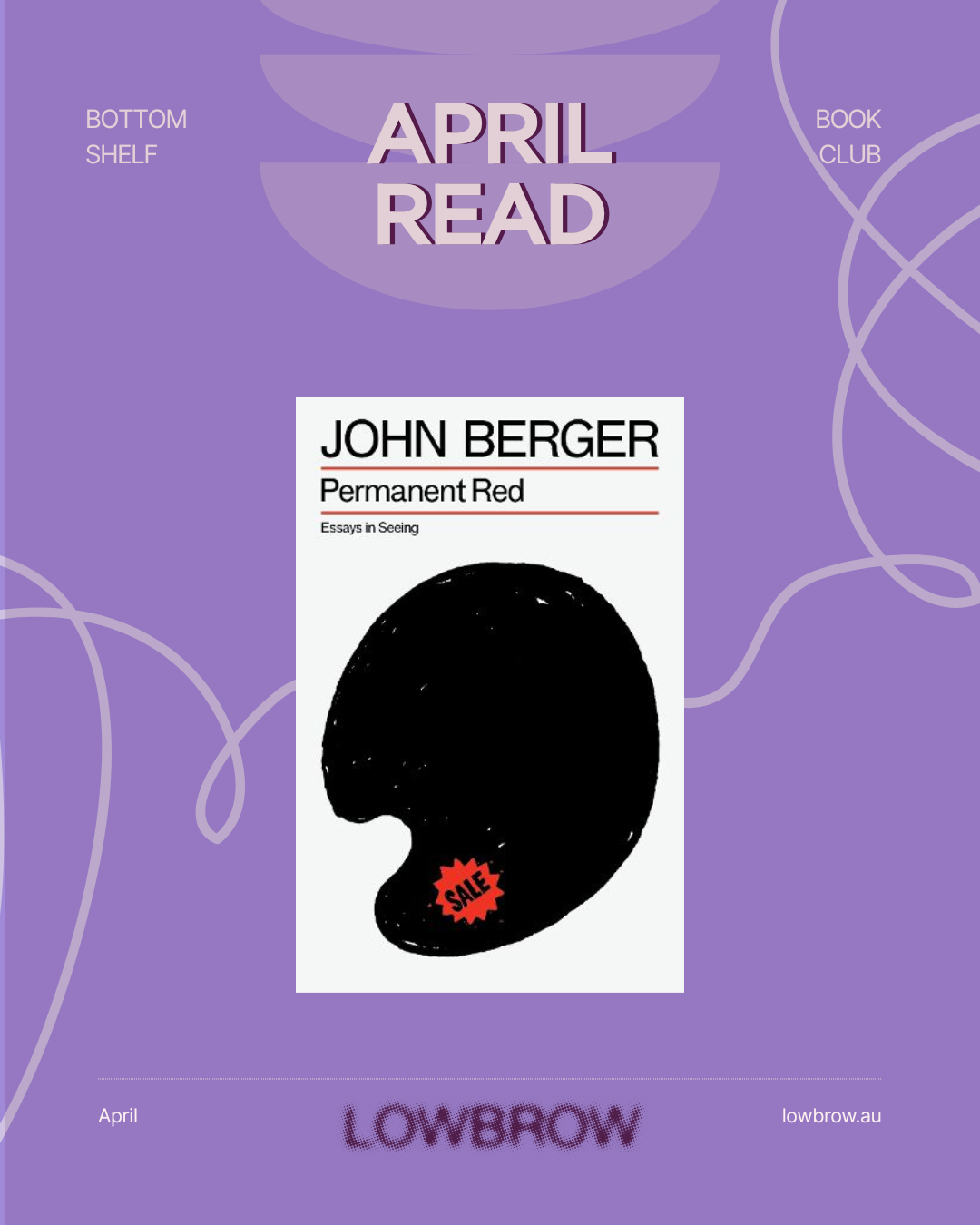
Bottom Shelf: Permanent Red by John Berger
You might be wondering, if we’re reading John Berger, why aren’t we reading Ways of Seeing? Quite frankly, great question and I’m glad you asked. Between the TV series (which I am not opposed to including in Bottom Shelf at some point) and how ubiquitous the text is in studying art and art history at any level, I don’t feel that I had much to add to the discussion. Permanent Red, on the other hand, was Berger’s first book, published in 1960. Reading his early criticism, his thoughts and arguments with himself, there’s a lot to identify with and unpack. Berger is an expansive author, winning prizes for his criticism and even the Booker Prize for his fiction, he’s also an author that feels unwieldy, so the beginning is where I will enter into the bibliographical fray.
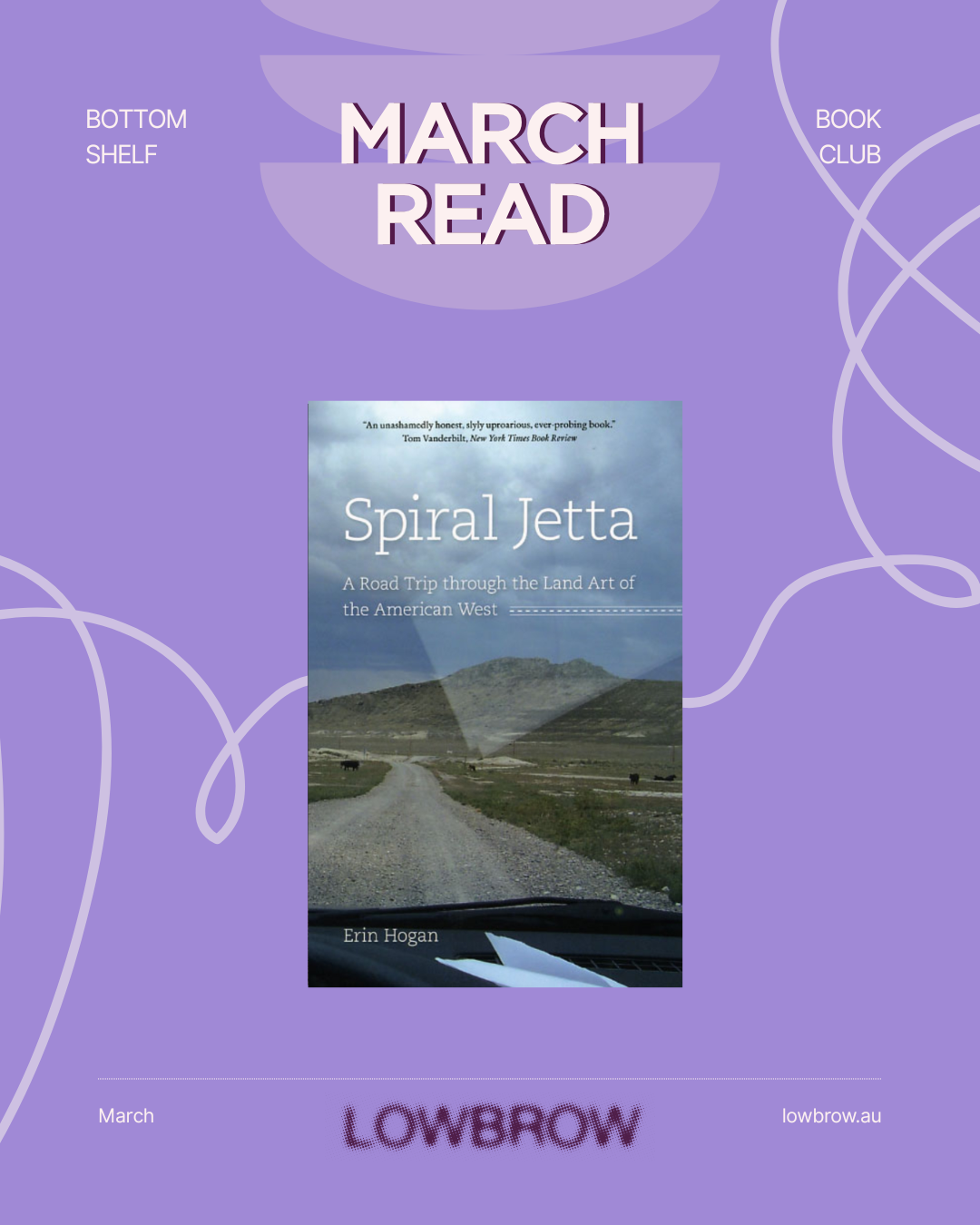
Bottom Shelf: Spiral Jetta by Erin Hogan
Erin Hogan embarks on a solo journey across the American West in search of Land Art. The 2008 book is deeply reflective of current anxieties for arts in Australia, with funding cuts, a world in turmoil, and an internal search for place in an uncertain world.
Sign up for emails
Be the first to know about new reviews.